- writing date 2026.03.17
- author Communication Team
- hits 4
MYSC CEO Kim Jeong-tae
(Korean History 1996)
Becomes an Investor Reading the Future

When one thinks of the head of an investment firm that maximizes the efficiency of capital, business or economics majors usually come to mind. Yet Kim Jeong-tae, CEO of Merry Year Social Company (MYSC), one of Asia’s largest impact investment firms, studied Korean history. Managing over KRW 100 billion in assets and supporting the growth of more than 250 startups, he is walking the path of an innovator who solves social problems through business. From a turbulent middle school student to a UN professional and eventually a pioneer of impact investing, we traced the unconventional road he has traveled.
A Turning Point Born of Desperation, and Lessons Learned on the Road
Kim recalls himself as “a troubled student who wanted to become a model one.” In middle school, he struggled to adjust and even faced the possibility of expulsion. At the time, he was a boy tormented by the belief that “the world does not need me.” What lifted him from that despair was a fierce determination to change his life.
He recounts persuading his parents to let him advance three years’ worth of New Year’s gift money in order to purchase the then-popular concentration device, MC Square. “Once my own money was on the line, the level of desperation was completely different. I immersed myself in studying for a month. When I ranked first in my class on the next mock exam, the entire school was stunned. Because my previous grades had been so low, some even suspected cheating. But I proved myself by maintaining first place in subsequent exams. The school soon experienced an MC Square craze. But interestingly, other students did not see the same results,” he adds with a laugh. “I realized that it was not the machine’s performance but the depth of desperation that made the difference.”
Entering Korea University’s Department of Korean History in 1996 during the turbulence of the IMF crisis era, he focused on building what he calls “assets for life.” Following the advice of his seniors, he set two ambitious goals: to read 1,000 books before graduation and to travel abroad every vacation. “I wrote down a numbered list up to 1,000 and headed straight to the library. Including my time in the military, I ended up reading about 800 books. During vacations, instead of enrolling in TOEIC classes, I packed a backpack. Traveling across 16 countries, I realized that outside Korea, no one cared about my major, my blood type, or my parents’ occupations. Once I stepped beyond those predefined boundaries, I began to see the countless paths I could take.”.
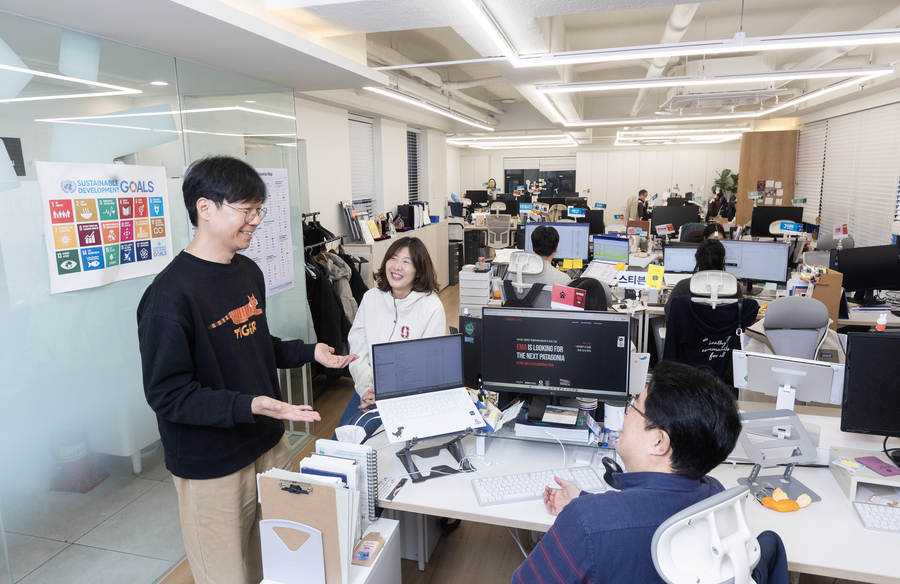
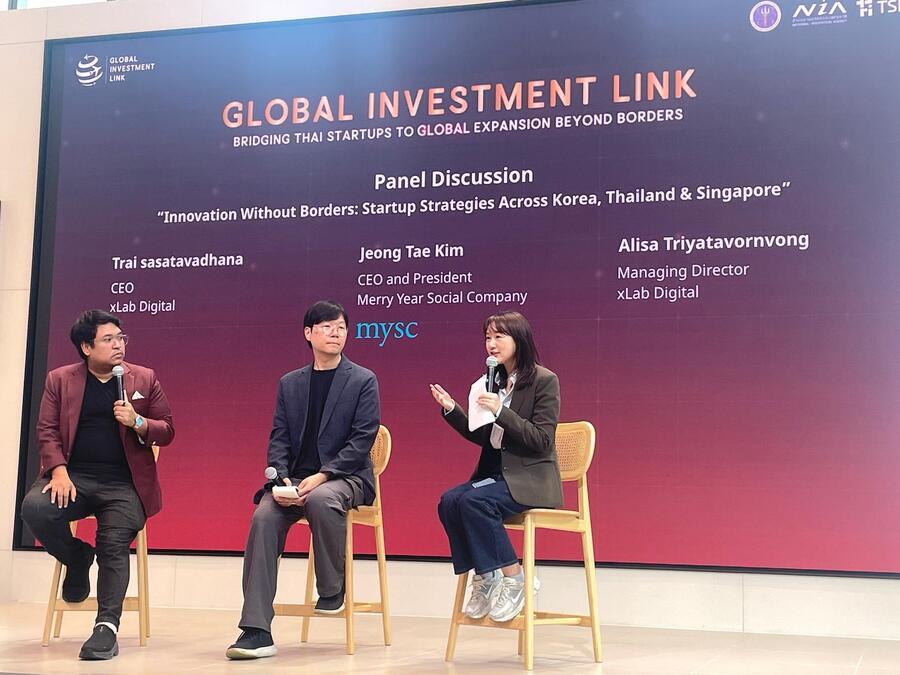
▲ (Top) With MYSC employees · (Bottom) At the ceremony marking the establishment of MYSC’s Thailand office
“If you have trained long enough to derive answers,
now become someone who defines the questions.”
From the United Nations to the World of Business
Once aspiring to become a historian, Kim’s perspective broadened through travel. Seeking to create more direct change, he pursued graduate studies in international affairs and went on to work for a UN-affiliated organization for five years. There, he witnessed global poverty and environmental challenges firsthand. Yet he found himself confronting an unexpected sense of dissatisfaction.
“I began to feel that the social problems the UN sought to address could also be solved through business. Even when international development progresses and poverty is alleviated, sustainable change ultimately comes from private-sector jobs and businesses.”
Recognizing the importance of business, he completed a master’s degree in Social Entrepreneurship at Hult International Business School in the United Kingdom. In 2012, he joined MYSC, Korea’s first social innovation consulting firm and impact investment company. It marked the beginning of his journey in impact investing—investing in social ventures with meaningful missions and supporting their growth.
Impact Is Now an Irreversible Trend
Until 2017, MYSC managed assets of approximately KRW 3 to 4 billion. Today, the firm has grown into a leading impact investment company with more than 250 cumulative investments and over KRW 100 billion in assets under management. The combined valuation of its portfolio companies has reached approximately KRW 2.7 trillion. MYSC has built an investment system that spans the entire corporate lifecycle—from the seed-stage discovery of promising startups to Series B rounds and Pre-IPO stages ahead of public listing. As an operator of TIPS* and LIPS*, it has consistently driven the growth of technology-based startups.
Companies such as Newtonne, an AI-based digital carbon management solution provider, SuperBin, a circular resource recovery robotics company, and UniqueGood Company, an interactive content platform, are expanding their scale within MYSC’s portfolio, combining social value with technological competitiveness. Recently, MYSC has even deployed Merry, an internally developed AI investment reviewer, thus experimenting with new approaches to investment decision-making and portfolio management.
Kim attributes this growth to what he calls an “intrapreneurial spirit.”
* LIPS: A policy-financing program through which the government provides additional funding to small business owners who have successfully secured private investment.
“If our own team members do not think like entrepreneurs, we cannot truly understand the companies we invest in. Intrapreneurs who define problems on their own and create measurable outcomes are MYSC’s greatest asset.”
Unlike conventional investment firms that focus on short-term growth metrics, MYSC proactively allocates capital to startups offering solutions that future society will inevitably require. Kim describes this shift toward impact investing as irreversible. “We invest in areas whose value will inevitably increase over time—the climate crisis, aging populations, and care infrastructure. These are unavoidable realities of the future. There was a time when subway stations operated without platform screen doors, but today they are considered essential. In the same way, an ‘impact DNA,’ where companies fulfill social responsibility, will soon become standard business practice.”
Impact has become not only critical for startups but also a survival factor for established corporations. MYSC plays the role of accelerator, connecting major corporations such as Hyundai Motor Company, E-Land, and KakaoBank with social ventures to collaboratively solve problems and create new value. Kim’s focus on connection and relationships is deliberate.
“Businesses must continue to excel within the market, but survival now depends on how they take responsibility for areas outside the market, particularly society and the environment. The relationship capital built by creating social impact provides the most accurate intelligence regarding what will be needed in the future.”
In the Age of AI, Read the Context and Find Your Own Questions
In an era when AI can generate answers, Kim emphasizes the power he developed through studying history: the ability to understand context. “AI is excellent at executing tasks, but deciding what tasks to assign it remains a human responsibility. When I encounter a phenomenon, I always look for its historical roots. Why did this term emerge? What is the context behind it? Those who understand context can pose sharper questions to AI.”
To students who dream of entrepreneurship or social innovation, he offers this advice: find a problem that only you can articulate.
“You have already trained extensively to derive correct answers. Now become someone who defines and sets the questions. In the future, the ability to identify and raise problems that only you can bring to light will matter far more.”
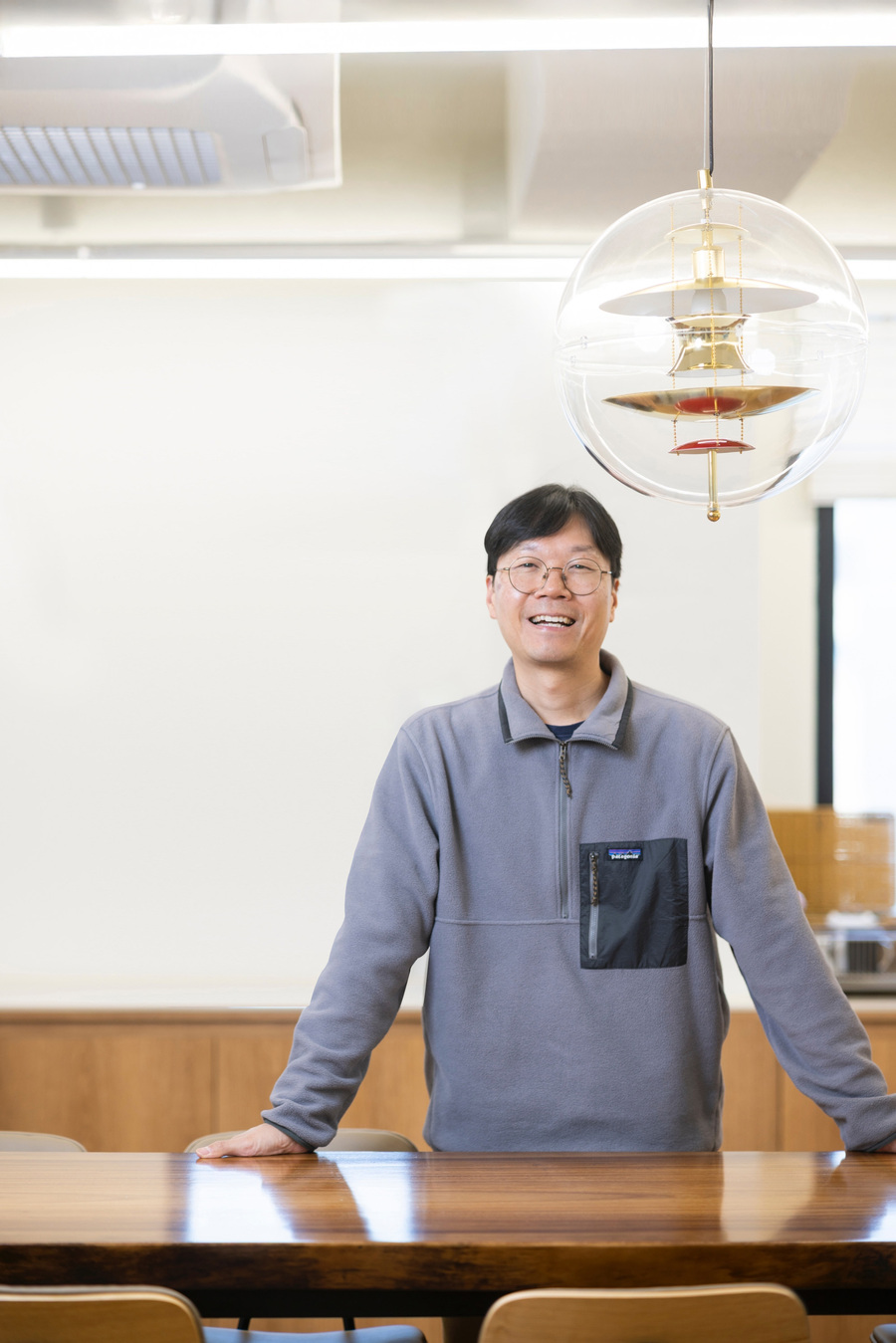
MYSC CEO Kim Jeong-tae
Special Page | CEO Kim Jeong-tae on “Impact Investing—What Makes It Different?”
Q. What investment criteria are unique to MYSC?
“Fundamentally, we invest in areas where time becomes our ally. Markets are always uncertain. There are good times and difficult times, constant ups and downs. But as time passes, there are directions society is inevitably heading toward. Renewable energy, demographic shifts, and care infrastructure are examples. We form hypotheses around these long-term trajectories and invest early in the solutions, services, and products that will become essential in those spaces. The key difference between us and conventional investment firms is that we look beyond whether a startup succeeds or fails financially. We also consider what kind of change the attempt leaves behind in society.”
Q. Is there a project that remains particularly memorable?
“One of the companies we invested in was a startup called WeConnect. From a business standpoint, it eventually shut down. But it raised a powerful question: is the term ‘career-interrupted women’ itself problematic? Although the company closed, the issue it raised remained. Recently, the term ‘career-interrupted women’ was officially revised to ‘women with career experience’ in the Framework Act on Gender Equality. If you evaluate the project purely from a financial perspective, it may seem disappointing. But when you consider the social change it generated, I believe it had a very tangible impact.”
Q. Is impact truly a measurable value?
“Impact refers to non-financial dimensions, but that does not mean it is entirely immeasurable. Some aspects are difficult, but many can indeed be monetized. For instance, consider a service that reduces loneliness among older adults. You can estimate the social costs reduced by lowering stress or caregiving burdens. There are even studies suggesting that chronic loneliness can be as harmful as smoking seven packs of cigarettes. In this way, we look at what negative costs have been reduced or what positive effects have been generated based on evidence. That is what we mean when we talk about impact.”
Q. What is your goal going forward?
“My goal is to create a world in which ‘impact’ naturally becomes part of countless business decisions. Not as an optional consideration, but as a given premise. I do not believe sustainability and financial performance need to be viewed separately. In fact, impact is necessary for growth. History repeatedly shows that businesses focused solely on short-term profit, without building healthy relationships with society, struggle to endure. I want to contribute to transforming the way those decisions are made.”