- writing date 2026.01.19
- author Communication Team
- hits 28
Via Dopamine Signals

Dopamine is often called the “happiness chemical,” but it is actually a neurotransmitter that precisely controls human decision-making, motivation, and impulse regulation. Professor Baek Ja-hyun of the Division of Life Sciences, who has studied dopamine for over 20 years, has proven through experiments that this substance is the key to human behavior.
Dopamine is a “Signal for Action,” Not Just Pleasure
Professor Baek, who majored in molecular and cellular pharmacology, focuses her research on revealing how dopamine signaling affects human behavior and diseases at the cellular and molecular levels. “Dopamine is not simply a substance that provides pleasure; rather, it is a signal that enables reward learning and triggers motivation.”
Her laboratory utilizes genetically modified animal models to explore how dopamine signals function and how the process leads to brain disorders such as addiction, eating disorders, and depression. Recently, her research team gained academic attention by identifying the interaction between insulin and dopamine in the brain. “We discovered that the dopamine D2 receptor interacts with the insulin receptor to regulate compulsive eating behavior. This is a new finding that connects brain research and metabolic research, which could lead to the development of strategies for treating addiction, obesity, and metabolic brain diseases.”
These results were published in the international journal Molecular Psychiatry, and this mechanism is currently being extended to drug addiction studies. “Few drugs are effective in treating patients with a drug addiction. Because addiction is a disease where the brain circuitry itself is modified, recovery through willpower alone is difficult. However, we confirmed that, when the balance between dopamine and insulin is disrupted, addictive behavior becomes uncontrollable. We are now continuing experiments with cocaine addiction models.”
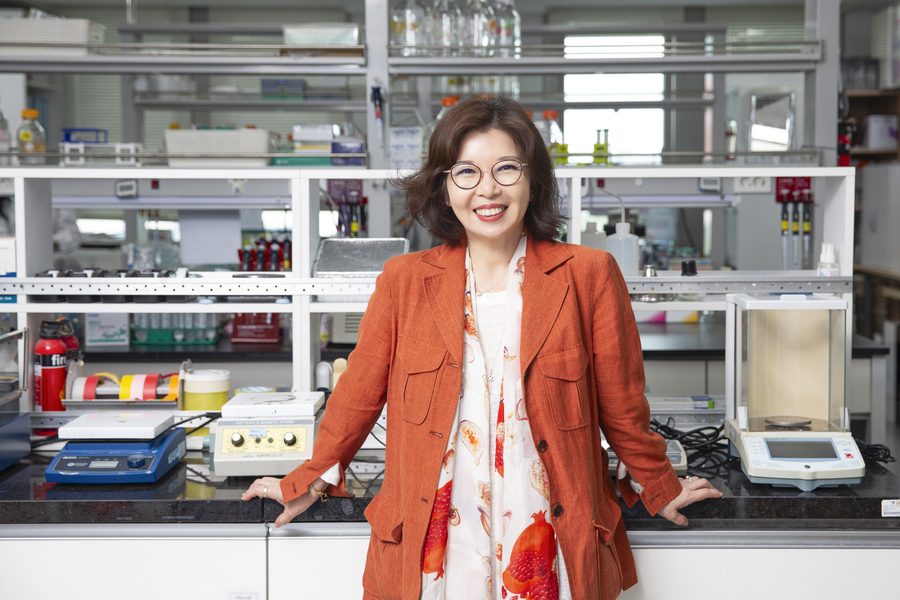
Professor Baek Ja-hyun
The Essence of Science is the Process of Learning What We Do Not Know
According to Professor Baek, the beauty of research lies in that moment when you realize what you do not know, rather than what you do know. “While it is good to learn new things by studying, I believe it is more important to realize what I don’t know.”
It was in the pursuit of “what she does not know” that she found her lifelong research topic. In her graduate school years, during which she experimentally proved the process by which dopamine signals in specific neurons control animal behavior, she realized that the secrets of human behavior and diseases are hidden within those complex connections. Later, while completing her doctoral and postdoctoral fellowships at Pierre and Marie Curie University (Paris 6 University) and the Institute of Genetics and Molecular and Cellular Biology (IGBMC) of the CNRS, she learned from experience that “science is a universal discipline that contributes to all of humanity beyond borders. It was an environment where researchers from about 40 different countries held weekly seminars and world-class scholars provided feedback. Preparing the seminars was tough, but it was an incomparable environment for research.” This experience established her international research perspective and cemented her calling as a scientist. After returning to Korea, she established a world-class research laboratory and has expanded the horizons of dopamine research.
A Day as an Educator and the Lab Mindset
Professor Baek’s day begins at the laboratory. “When I arrive in the morning, I complete a round of the lab, prepare for lectures, and hold student office hours. During lab meetings, we share papers and data and discuss research directions together. The day really flies by when I focus on evaluating research grants, reviewing papers, and consulting with undergraduates.”
The lights in the lab are always on. “Students stay late for experiments. I usually leave around 8 p.m., but students often stay until 10 p.m., because timing is crucial in our research. That’s why I am always on standby 365 days a year.” She thinks that the fundamentals of research are honesty and cooperation. “Science is the task of revealing the truth, so treating data with honesty is the top priority. For research where failure frequently occurs, persistence and trust are the greatest assets.”
Research is Ultimately About Human Health
She feels most rewarded when a student who lacked confidence finds their own topic and grows into their role. “Education is not just about conveying knowledge. It is a process of developing the ability to ask questions and find answers for oneself. I always tell my students that learning is not just for oneself, but a form of preparation to help others someday.”
Professor Baek says that the moment she feels most rewarded is when academic discoveries solve social problems. “My goal is to identify the fundamental principles underlying intractable diseases like addiction or eating disorders to provide substantial help to those suffering.” Her research uncovering the interaction between dopamine and insulin has attracted international attention by suggesting new approaches to intractable brain diseases. She defines the ultimate goal of science as “reducing human suffering and making life healthier.” Her two-decade exploration continues as a scientific quest to reveal the principles of the human mind and recovery.
Story of the Molecular Neurobiology Laboratory
Kang Byeong-jun (integrated master–doctoral degree program, class of ‘14, candidate for Ph.D.), Kim Bo-kyeong (doctoral course, class of ‘16, candidate for Ph.D.), Kim Min-ji (integrated master-doctoral degree program, class of ‘20), Kim Young-heon (master course, class of ‘24), Kim Ki-yeon (master course, class of ‘25)
Q: Could you introduce your respective research areas?
Bo-kyeong: I am conducting research related to food addiction.
Byeong-jun: I am working on stress and drug addiction research.
Min-ji: I study the connection between dopamine receptors and metabolic diseases. As the lab manager, I also handle administrative tasks.
Young-heon: I am researching neuroglial cells, which support neurons.
Ki-yeon: As the newest member and a fresh graduate student, I am doing stress-related research.
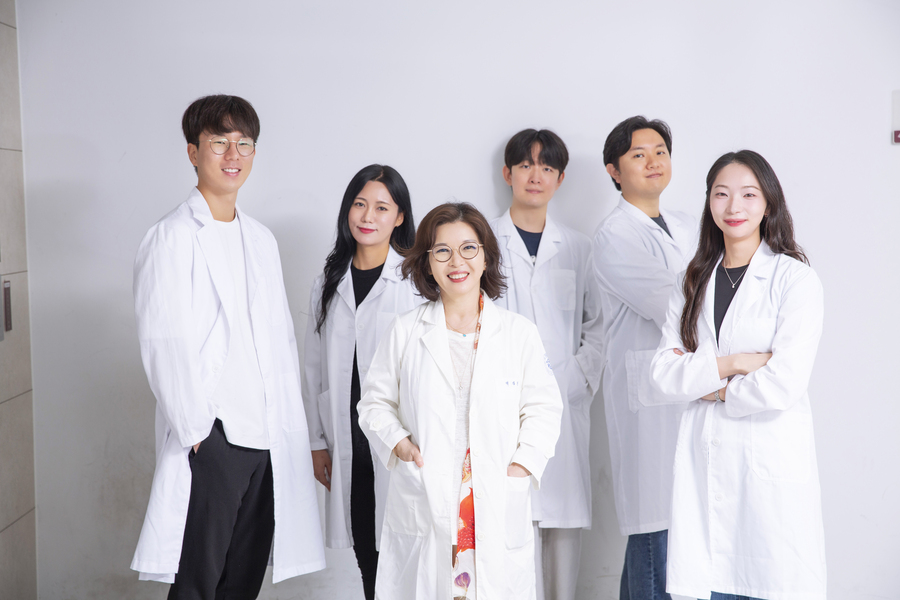
Q: Wondering why you chose this lab among so many others?
Bo-kyeong: I chose this path because I enjoyed the neurobiology course I took as an undergraduate. I wanted to grow in this lab, where you can see both basic research and clinical implications.
Byeong-jun: It started when I was an undergraduate researcher in this lab. It was attractive because molecular neurobiology is a difficult field with many unknowns.
Min-ji: I felt the fun of behavioral experiments while conducting memory experiments as an undergraduate. Later, while looking for papers in the field, I read a paper where Bo-kyeong was the first author. It was the first paper I ever read from the first word to the last.
Young-heon: I was curious about how memories are stored in the brain. The research direction is clear, and Professor Baek respects other researchers’ ideas. I felt it was a place where I could grow.
Ki-yeon: I became interested in addiction and depression research while double-majoring in psychology.
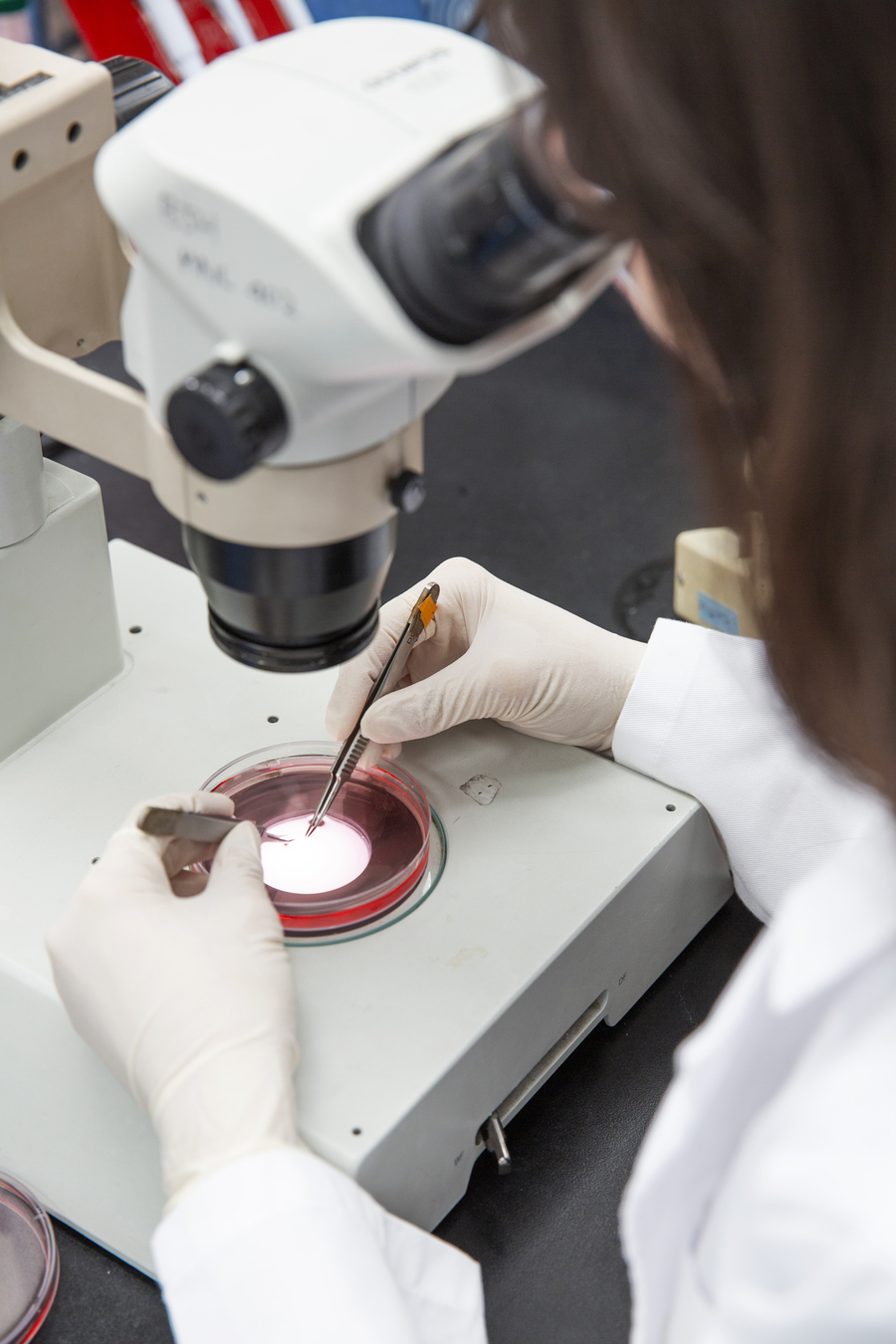
Q: What is a day in the lab like?
Young-heon: I make a weekly plan on Mondays, conduct experiments during the week, and organize data during the weekend. We have lab meetings once a week or discuss individual projects with other members.
Q: When has been the most rewarding moment during your research?
Bo-kyeong: I was proud when my paper was recently published in Molecular Psychiatry. I feel most rewarded when academic achievements are recognized, such as publishing in prestigious international journals or winning awards at conferences.
Byeong-jun: Animal experiments take a long time from preparation to completion. When results differ from expectations, the cost of failure is high. Therefore, the reward is great when the results of a long experiment perfectly match the hypothesis.
Ki-yeon: I’m still in the learning stage, but I feel happy when I can perform experiments on my own.
Q: As brain researchers, do you have any secrets to keeping your brain healthy?
Min-ji: To relieve light stress, I often go to the convenience store in front of the lab with Bo-kyeong to buy coffee and jellies. In the long term, good sleep and exercise are the basics.
Ki-yeon: I try to reduce late-night snacks and create an environment for deep sleep.
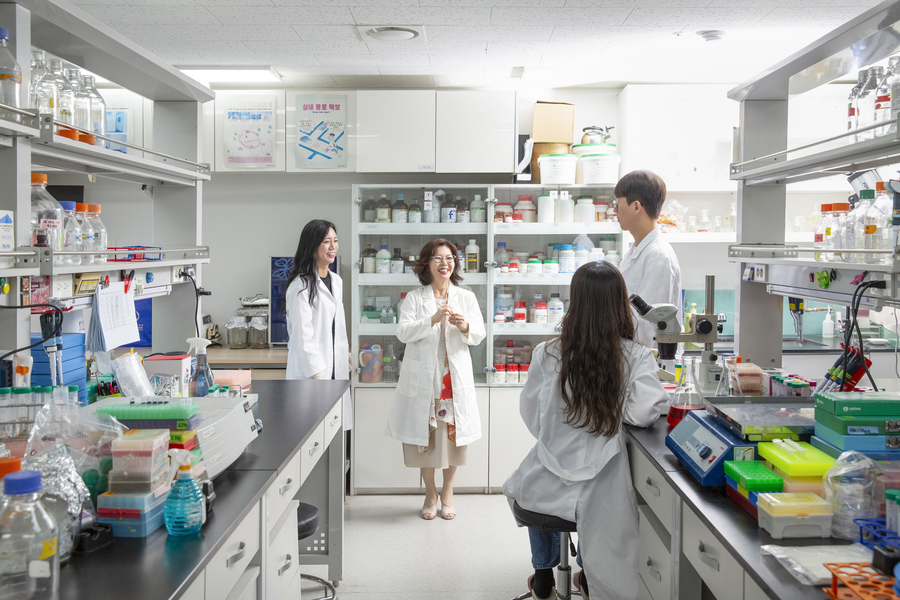
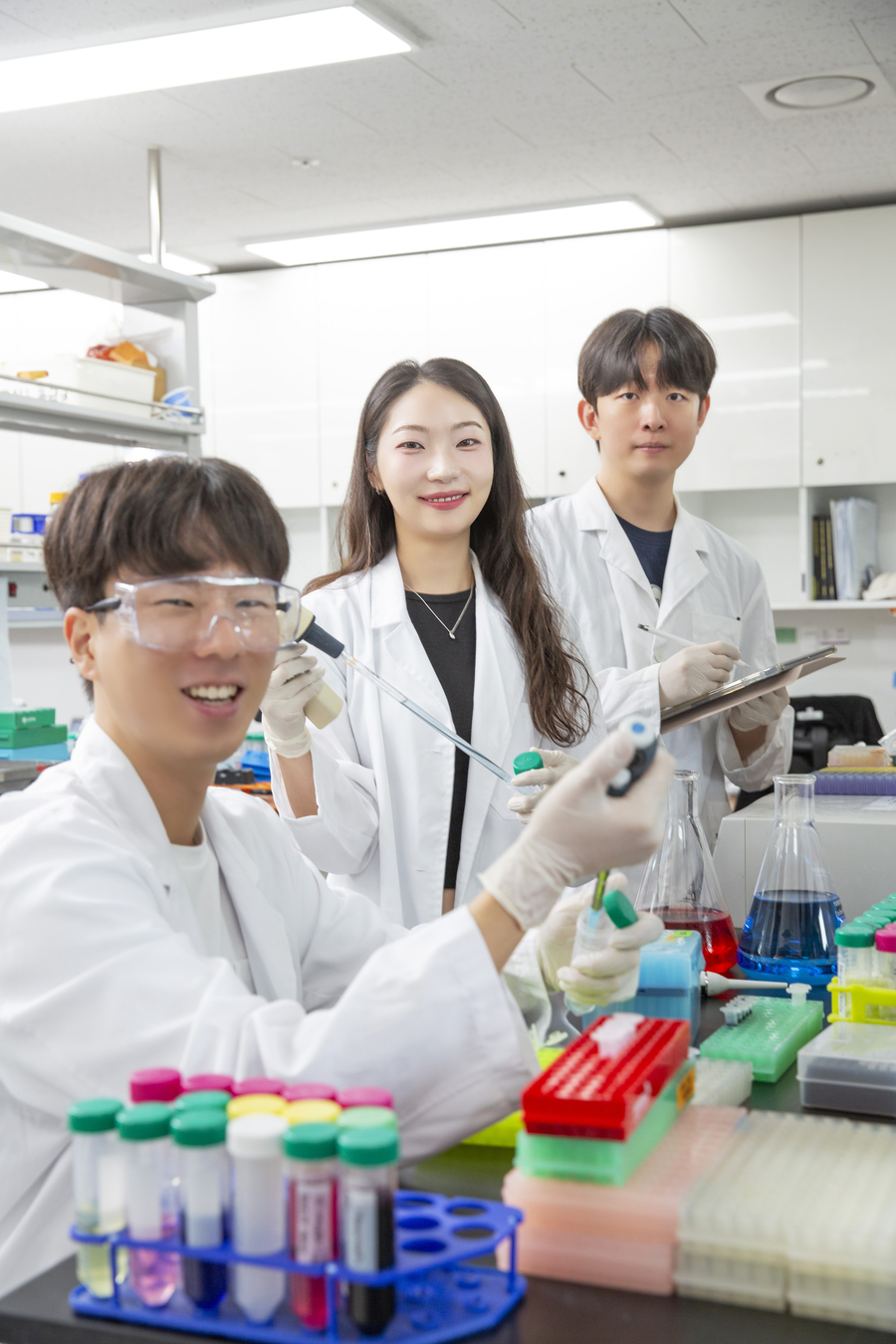
Professor Baek Ja-hyun and researchers in her lab
Q: What is the most memorable event that has happened in the lab for you?
Bo-kyeong: The time we had a wine party when the first paper I participated in during the early stages of my Ph.D. course was accepted. I also remember the time Professor Beak bought a really pretty cake for Christmas and we shared it.
Q: What is the most important thing you have learned from your Professor?
Bo-kyeong: Her thorough and long-term perspective. She guides us to constantly reflect on what our research means in terms of its academic and social consequences, rather than simple data accumulation.
Byeong-jun: I appreciate her sincere attitude toward research. I always learn the importance of conducting experiments diligently and presenting data obtained from the experiments in papers in a scientific manner.
Min-ji: I have learned a lot from her inquisitiveness, insight, and meticulous leadership!
Young-heon: I have learned the attitude of not overlooking any data and trying to find meaning in it.
Ki-yeon: I am learning how to present scientific evidence for a claim.
Q: Please describe the lab for those who may be interested in it.
Bo-kyeong: We don’t hesitate to help each other when help is needed. The collaborative atmosphere is the biggest advantage.
Young-heon: The senior researchers, who quietly immerse themselves in research but also crack small jokes, make the lab atmosphere warm and comfortable.
Byeong-jun: The atmosphere of the lab allows us to dig deep into our assigned topics until the end.
Min-ji: I was worried that I would miss networking in society by coming to graduate school, but I think I have learned more in this small community. I have gained the confidence that I will be able to live well even after graduation.
Q: Finally, do you have any advice for junior researchers?
Min-ji: If you have a spirit for constant adventure, you will be able to grow significantly.
Bo-kyeong: The research process can sometimes be a hard journey, but I believe the sense of achievement gained during that process is truly valuable.
Byeong-jun: I hope you have true passion and a mindset to grow together with others by actively communicating with your colleagues.