- writing date 2025.12.12
- author Communication Team
- hits 58
Director of Nam’s Orthopedic Clinic
or the Hippocrates of Runners

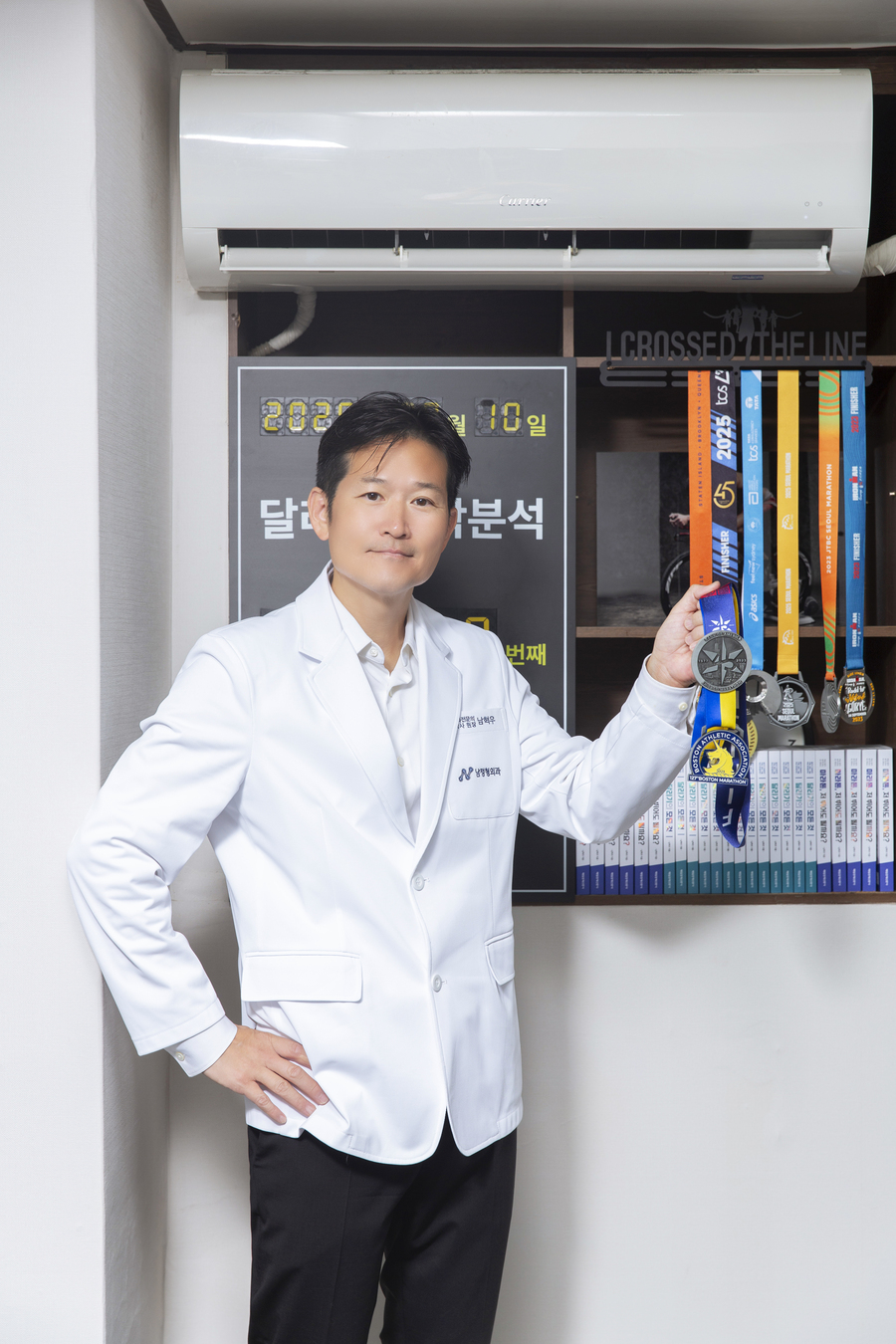
Ten ultramarathons. One hundred and two full marathons. Twenty-seven Ironman triathlons. Completion of five World Marathon Majors and even a team victory at an international ultramarathon. The owner of this astonishing record is not a professional runner, but an orthopedic surgeon. We met Dr. Hyuk-woo Nam, the “Ironman Doctor,” who says that to run better, one must learn to rest better.
A Pilgrimage Spot for Runners: Nam’s Orthopedic Clinic
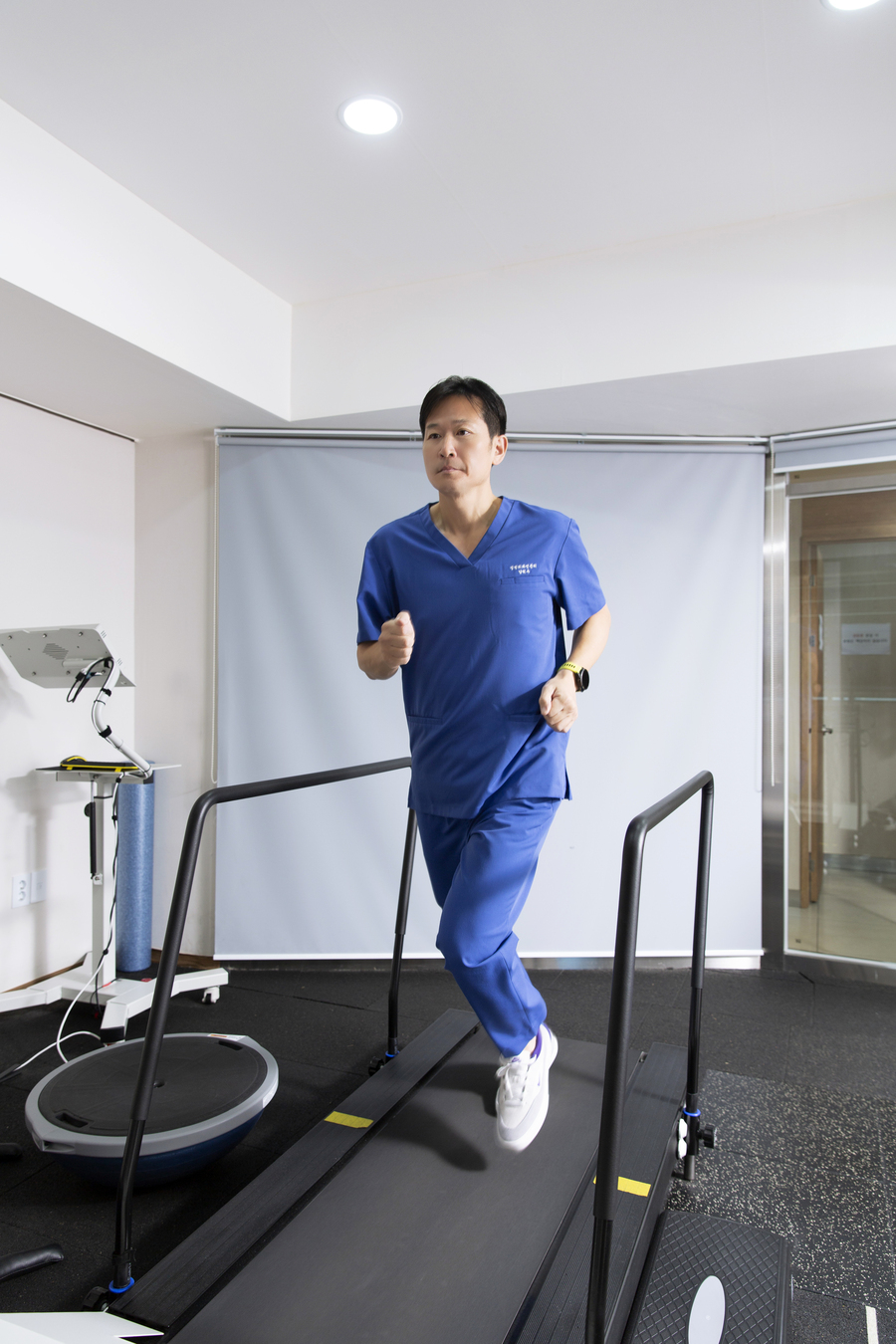
The clinic is busy with patients waiting for consultations. What stands out is the number of young patients wearing athletic gear, with the physique of trained athletes. Another striking feature is the clinic’s advanced running-form analysis center, something rarely found in typical medical facilities.
Since opening the clinic in 2005, Dr. Nam has cared for patients in the community as a specialist in orthopedics and as a runner who loves running as much as anyone alive. By combining his own experience with rigorous medical research, he has become the doctor runners trust most. Equipped with facilities that rival leading global running centers, and armed with expert knowledge refined through constant reading and writing of the relevant research, he treats runners and sports-injury patients while teaching them how to run without incurring further injuries. The clinic houses InBody, static and dynamic Footscan, exbody, MotionMetrix*, and other diagnostic systems for analyzing running mechanics. Because an orthopedic specialist conducts the examinations and analysis directly, runners visit from across the country and even from abroad.
Taking after his father, who loved to write, Dr. Nam is also an enthusiastic author. He recently published Marathon, Am I Really Allowed to Run? (Maeil Business Newspaper), one of the most practical and safe introductory guides to marathon running. Drawing on data from more than 6,000 runners, the book condenses essential training information and methods for strengthening both body and mind. It offers a friendly roadmap for anyone beginning their marathon journey.
Meeting Marathon in a Moment of Crisis
Meeting Marathon in a Moment of Crisis
Although Dr. Nam now has a running résumé few amateur runners could dream of, he actually began running only 13 years ago.
“As an orthopedic surgeon, I found myself in a crisis when a severe cervical disc herniation began to disrupt my entire life. Even holding a scalpel to perform surgery or typing clinical charts caused intense pain. My identity as a physician felt shaken, and I fell into deep discouragement. Around that time, my older brother, Hyun-woo Nam (Director of Yeouido Samsung Clinic for Anesthesiology and Pain Medicine, College of Medicine 1981), who is also a doctor and a Korea University alumnus, suggested I try running. Until then, I enjoyed asymmetrical sports like ice hockey and golf, but following his advice, I took my first step toward rehabilitation through running.”
He began simply—ten minutes walking and ten minutes jogging along the Han River in the cold winter air. To avoid aggravating the pain, he supplemented his routine with swimming, cycling, and strength training, dispersing impact and carefully recording his body’s reactions as he slowly accumulated time on his feet. “Even though I am a doctor, I was amazed by how dramatically things improved. I became captivated by the almost mysterious effects of running. From a scientific perspective, running strengthens the spinal erector muscles and develops the core. Improved blood circulation also contributes to disc recovery. I searched the literature and found many studies supporting these observations.”
What began as ten minutes of running gradually expanded to 10 km runs, then half marathons, then full 42.195 km marathons, eventually leading him to the triathlon, trail running, and the ultramarathon. He recently completed his 101st marathon. “This experience has shaped my entire approach to medicine. Many of my patients come in with sports injuries, and I always tell them that recovery and continuity matter more than times or rankings. What matters is not pushing past today’s limits at any cost, but protecting the body and mind so that they can run again tomorrow. That is ultimately what strengthens a person’s life.”
“I always tell my patients this: what matters is not surpassing today’s limits, but preserving the body and mind so you can run again tomorrow. Recovery and continuity — that is the real philosophy of running.”
KU College of Medicine, and the Running Doctors
When Dr. Nam thinks back on his years at Korea University, the word that comes to mind is “romance.” His most vivid memory is, without question, the annual Ko-Yon Games. He still recalls one moment in particular as if it were yesterday: in the 1994 MBC Basketball Tournament, Joo-yup Hyun delivered a powerful dunk, overwhelming the Yonsei team led by Jang-hoon Seo. After the wild cheering, he and his friends gathered for drinks, singing the Boat Song with flushed faces—a moment he still cherishes.
“My time at Korea University taught me to set aside ego and to build genuine relationships. I learned the deep camaraderie of people who pull one another forward and hold one another up. The way I relate to people today has its roots back in those years.”
KU’s College of Medicine has its own storied running culture. Founded in 2015, Running Doctors KUMA is the nation’s first medical-school marathon club. It is a popular community where alumni and students choose days each month or each week to run together, and now has about one hundred members. The alumni team once achieved the remarkable feat of winning the team competition at the Jeju International Ultramarathon.
A Son’s Voice at the Finish Line
A Son’s Voice at the Finish Line
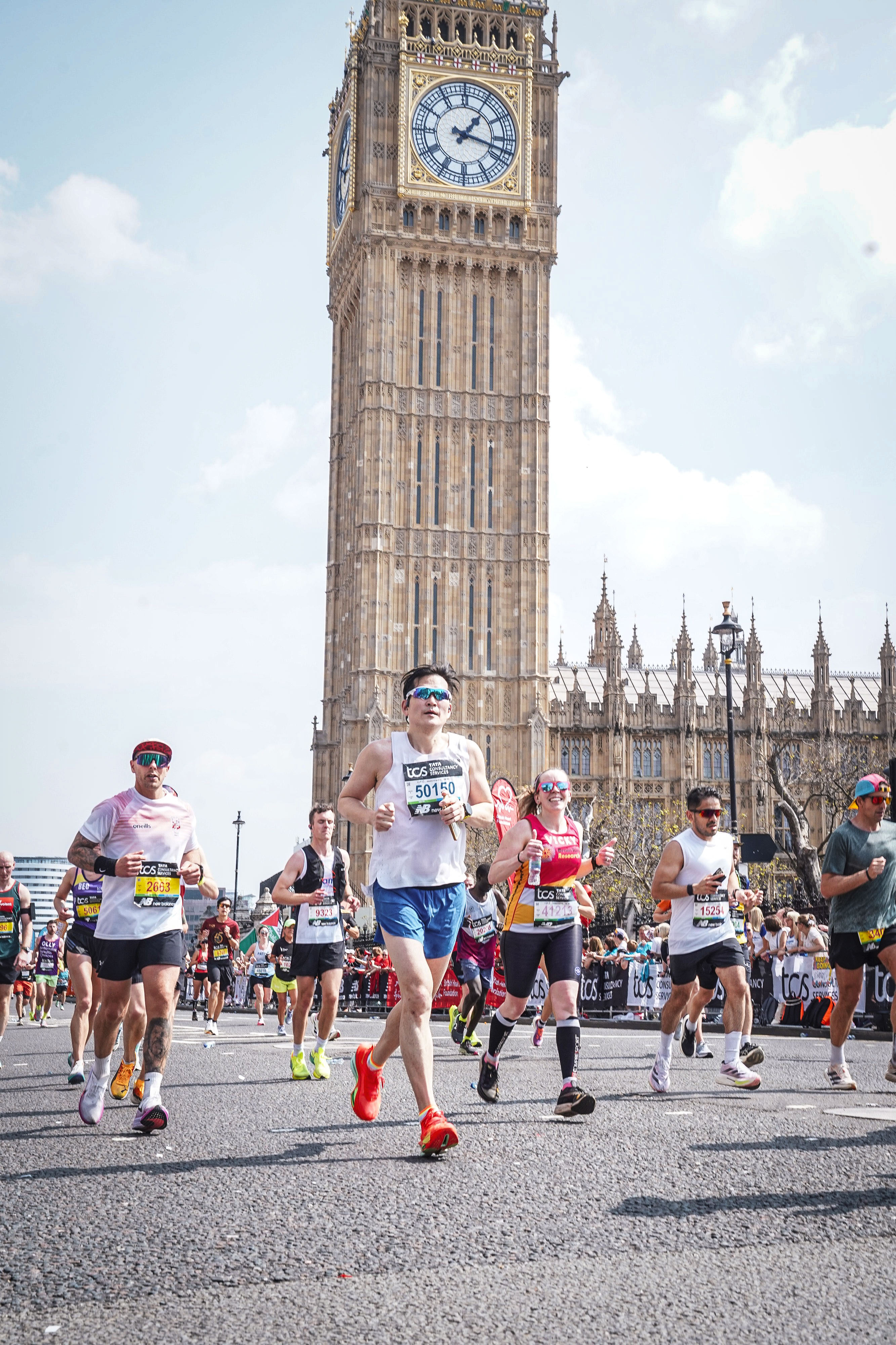
Although he has completed major marathons in New York, Boston, Chicago, London, and Sydney, the running memory he treasures most is from an entirely different race.
“In 2014, I ran the Chuncheon Marathon with my son. I ran the full course, and my son, ten years old at the time, bravely participated in the 10 km race. We couldn’t run together because the courses were different, but throughout the run, I was full of emotion wondering, ‘Is he doing well on his own?’ ‘Will he be waiting for me at the finish?’ I remember that feeling so clearly.” The marathon is often described as a race against oneself, but that day was different. The thought that someone he loved was waiting at the finish line—where he would hear that familiar voice again—filled his steps with an indescribable anticipation.
“When I finally crossed the finish line, I heard my son shout, ‘Dad!’ To me, that moment was more precious than any medal in the world. That single word is still etched deep in my heart and continues to motivate me to run.”
"잘 쉬는 러너가 현명한 러너입니다"
The greatest lesson Dr. Nam has learned from marathon running is the importance of resilience. Many believe training should always be harder, longer, more intense. In reality, it is the balance of load, relief, and rest that allows a runner to go the distance. “Running is a high-impact exercise. Your entire body weight repeatedly lands on your joints and muscles, so recovery is essential. That is why balance between impact and non-impact activities matters. After running, you must switch to lower-impact exercises like swimming, cycling, or strength training so you can recover while still maintaining fitness. That is how the body avoids breakdown and finds the strength to move forward again.”
With the recent running boom, he has seen many novice runners harm their bodies because of “mileage obsession”—the belief that one must run every single day. A wise runner, he stresses, respects rest as much as training.
“For me, the most valuable lesson marathon-running has taught is not ‘how to run faster,’ but ‘how to listen to my body’s signals.’ To have the joy of running for a long time, recovery must come first. Proper rest, cross-training, and sometimes even doing absolutely nothing at all are integral parts of running. During recovery, muscles grow stronger, injury risk decreases, and mental focus is restored. Only runners who cultivate resilience can continue running steadily and discover genuine growth and joy along the way.”
What was once considered an extreme challenge, the marathon has now become an accessible extension of everyday running—a form of movement that enriches daily life. Dr. Nam hopes everyone can maintain their health and find fulfillment through running. This is the sincere wish of a physician who is also, at heart, a runner.
How Far Have You Run?
Dr. Hyuk-woo Nam’s Marathon Story
A Message to KU’s Young Runners
When you are young, it is natural to want to run faster. Everyone has that desire. But running well is not simply about speed. A truly remarkable performance is built on balance, harmony, strength, and a deep understanding of running itself—and above all, it is complete only when you remain injury-free.
Running also gains depth as you mature. Experience accumulates with age, long distances become more manageable, and both body and mind grow together. Running is a primal human movement as well as a tool that trains the body and the spirit at the same time.
That is why I want to tell every young runner this: do not hurry toward faster times. Focus instead on building a strong foundation for the future. I sincerely hope you grow in body and mind through running so that one day you can truly appreciate the runner you have become.
The Most Demanding and Beautiful Route: The Sydney Marathon
On August 30, 2025, I completed my 101st full marathon at the Sydney Marathon, finishing in 3 hours and 28 minutes. It marked my fifth World Marathon Major finish after Boston, Chicago, New York, and London. Sydney joined the Majors for the first time this year. The race begins at Bradfield Park in North Sydney, crosses the Harbor Bridge, winds through the city, and finishes in front of the Opera House. It is known as a “sightseeing course,” showcasing Sydney’s iconic landmarks—but the course itself is anything but easy. Winding paths, frequent rolling hills, and continuous steep undulations make Sydney widely regarded as the most challenging marathon of the Majors.
With temperatures between 8 and 17°C and low humidity, the weather was ideal for running. The time difference with Korea is only one hour, yet running in the race felt like being on the opposite side of the world. The first 10 kilometers pass by easily, but after 20 kilometers the charming hills inside the city begin an endless cycle. After 30 kilometers, past the Royal Botanic Garden, it is no longer a test of stamina but of muscular endurance. In the final 40-kilometer stretch, you catch glimpses of the Opera House as if it is just within reach—until at last you cross the finish line and all fatigue melts away. It was one of the most memorable finishes I have ever experienced.
What makes the Sydney Marathon special is not only the extremity of the challenge. The scenery, the connection with fellow runners, and the clarity of the day all came together to reaffirm the pure joy of the marathon.
This race reminded me once again how important it is not to push beyond reason and to simply enjoy the act of running to the very end. More than chasing a time, the greatest reward was imprinting each moment—the landscape, the rhythm, my breath—deep in my memory.