- writing date 2025.09.29
- author Communication Team
- hits 61
Professor Woo Han-Young of the Department of Chemistry and the Organic Optoelectronic Materials Laboratory

Professor Woo Han-young, who leads the Organic Optoelectronic Materials Laboratory, is recognized as a master in the field of materials. He has published over 500 Science Citation Index (SCI) papers and has been listed as a “Highly Cited Researcher (HCR)” in the cross-field category for three consecutive years, including last year. His research goal is to “develop innovative materials that will contribute to solving humankind’s most challenging problems.”
Materials - the core of future technology
Most electronic and energy devices are built on the foundation of “materials.” Circuits that transmit electricity, solar cells that capture light, and displays that illuminate themselves all depend on the materials they are made of for their performance. This is why materials are drawing much attention as the core of future technology. The “conjugated organic molecules,” which Professor Woo is working on, have a structure in which double and single bonds are connected alternately, allowing electrons within the molecules to move freely. This structure gives the molecules electrical and optical properties, leading to diverse applications in solar cells, displays, sensors, and photocatalysts. Although they look like simple plastics, these organic materials actually play the precise role of converting light into electricity, converting electricity into light, and detecting biological substances.
“Unlike inorganic materials, polymer-based electronic materials can be easily prepared by applying a solution (a solution process) rather than going through the complicated process of thin film formation in a vacuum.
They are actively being researched as future electronic materials because they are applicable to ‘flexible, stretchable, foldable, and wearable’ devices. My lab is developing these organic materials, especially polymer-based electronic materials, and conducting research on their application to various organic electronics. We are carrying out basic research to develop novel structures and elucidate their operating principles, and at the same time we are also conducting joint industry-academia research projects with companies such as Samsung and LG.”
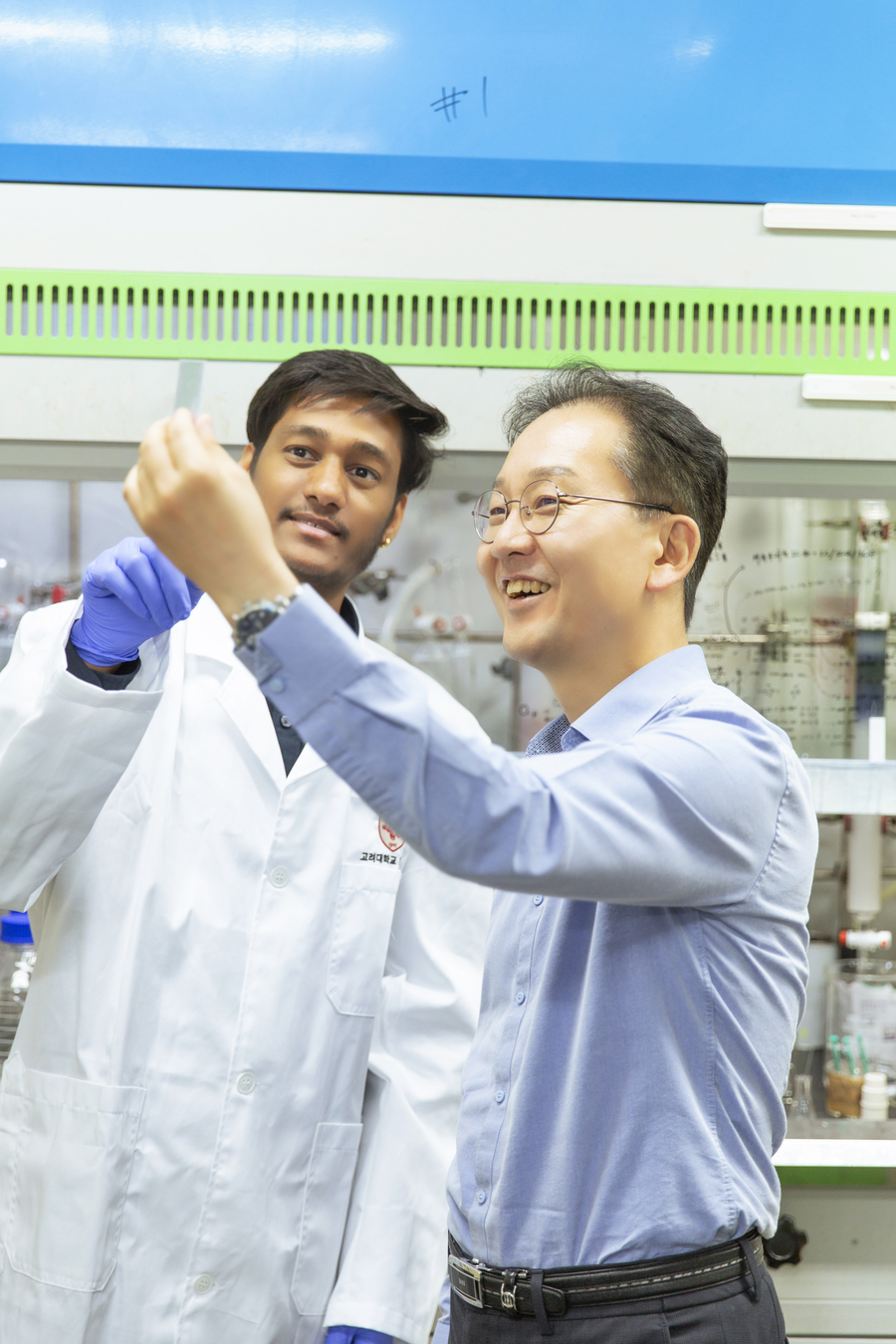
Green hydrogen - an ideal energy source in the era of climate change
His research is drawing global attention because it offers alternatives for realizing a sustainable future. Organic solar cells, which can be attached to buildings, windows, clothing, and bags, allow anyone to generate electric power in a convenient and eco-friendly manner. OLED displays, a representative example of the use of organic optoelectronic materials, are already completely changing the form and use of digital devices. Organic light sensors, capable of detecting even the smallest amount of light, are useful for medical diagnosis and environmental monitoring.
Recently, Professor Woo has been focusing on “green hydrogen,” which is emerging as an “eco-friendly energy source.” He says, “Recently, clean energy research has centered on using sunlight to perform water splitting and produce hydrogen from it.” He adds, “Our lab is also synthesizing water-splitting photocatalytic nanoparticles using organic semiconductors as active materials and conducting experiments on hydrogen production using them. Hydrogen produced from petroleum generates carbon dioxide, but hydrogen obtained from water is clean. It addresses energy depletion issues while being environmentally friendly, making it an ideal energy source in the era of climate change.”
Chemistry, physics, polymer science - Professor Woo’s research history is itself a fusion
Discovering unprecedented new technologies like this is achieved through rigorous convergent research. While material development begins with chemistry, which involves designing molecular structures, analyzing material properties falls under the realm of materials science. The application stage, where materials are fabricated into electronic devices, is closer to electronic engineering. Semiconductor design and artificial intelligence technologies are also required. This explains the professor’s selection for the HCR “Crossfield” category for three consecutive years.
His research history is itself a fusion. He majored in chemistry as an undergraduate and earned a master’s degree in physical chemistry and a doctorate in polymer chemistry. He then served as a senior researcher at Hyosung R&D Center and completed a postdoctoral fellowship at UC Santa Barbara. After returning to Korea, he served as a professor in the Department of Nano Fusion Technology at Pusan National University before joining KU in 2015. His diverse experiences across academia and business have inspired him to pursue research that contributes to a better world, not just for the sake of research itself. Professor Woo has 14 students in his lab working alongside him toward this goal.
A lab where all members grow together as students and fellows
The lab has not only Korean students, but also Chinese and Indian students. As a multinational organization, the weekly “Lab Meeting” is conducted in English. The “Paper Seminar” involves presenting and discussing the latest research papers. New students, in particular, are required to read two to three papers per week. “I often tell my students to ‘read a lot of papers, study, and constantly exercise imagination.’ They work hard and immerse themselves in experiments late into the night, but often times, they lack theoretical understanding. To solidify their theoretical knowledge and understand the research trends in their field, they must consistently read papers,” he explains. While he knows this can sometimes sound like nagging, he repeatedly emphasizes the importance of reading papers, reflecting his deep affection for his students. To Professor Woo, they are not just students but also fellow researchers who advance his research together with him. He sincerely hopes that they will cultivate their abilities on a solid theoretical foundation and become recognized researchers in their own fields. True to his wishes, we hope that the Organic Optoelectronic Materials Laboratory will one day become a cradle of scientific and technological talent that will lead Korea’s future.
Introducing Professor Woo Han-young’s Organic Optoelectronic Materials Lab
Ha Jung-min (doctoral student, class of 20), Kwon Ha-im (master’s student, class of 24), Kim Hyeong-hui (master’s student, class of 24), and Oh Seung-won (master’s student, class of 25)
What are the roles that each one of you play in the lab?
Jung-min: I’m the lab manager. I represent the lab in terms of administrative tasks, facilitate communication, and create an environment where everyone can focus on their research. At the same time, I concentrate on my own research, while also working with and advising junior colleagues on various aspects of their research, including their experiments and writing of papers.
Haim: As a third semester graduate student in the master’s course, I’m working on not only research and experiments, but also communication and collaboration within the lab. I also help junior colleagues when they have questions about experiments or lab life.
Hyeong-hui: As a second semester graduate student of the master’s program, I mainly take care of new graduate students.
Seung-won: I’m a freshman, so I’m still learning a lot.
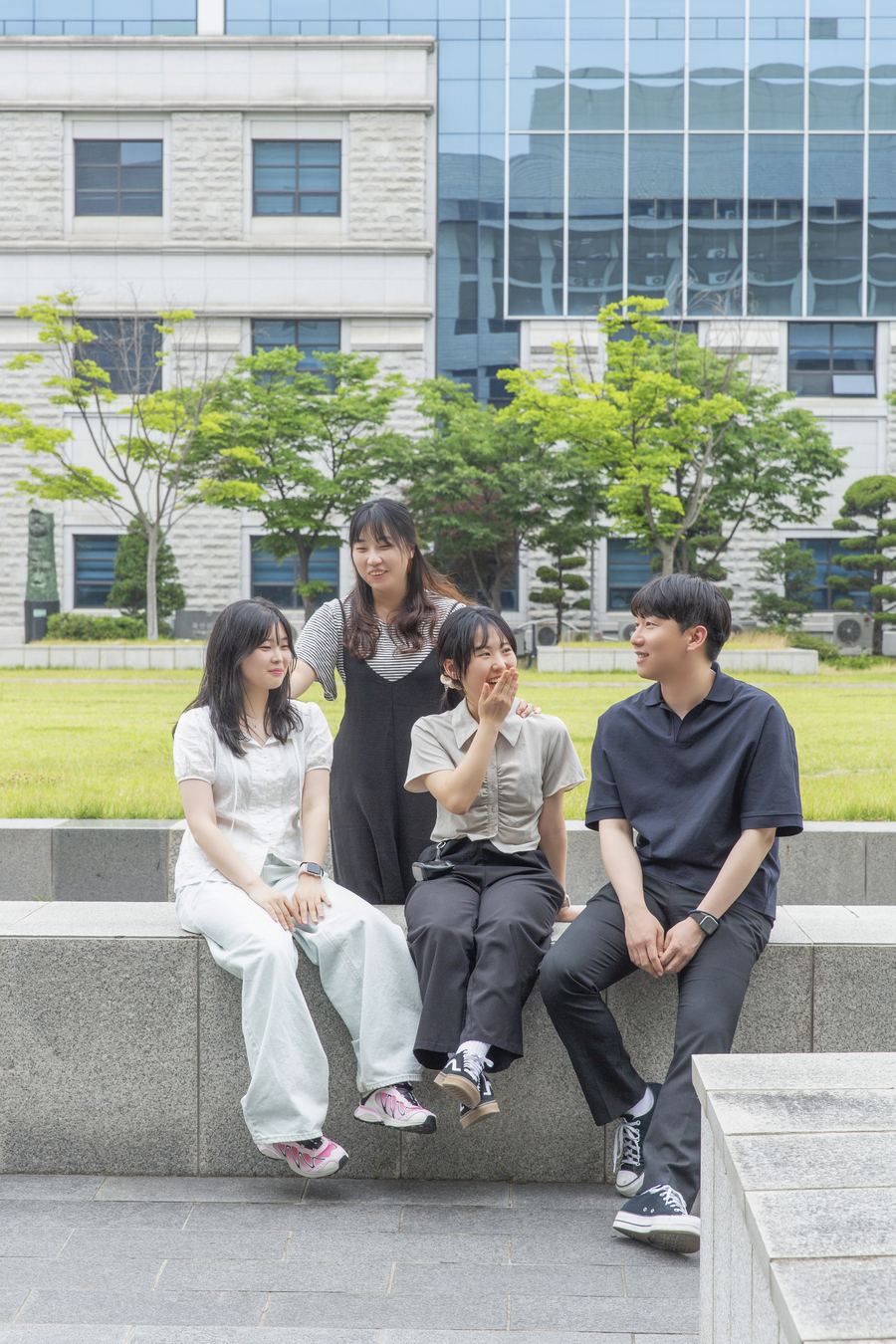
What are lab life and the atmosphere in the lab like?
Jung-min: Our lab is highly structured, and the lab members are committed. Our workday starts at 9 a.m. and ends at 6 p.m., but most people stay in the lab until well after that. While everyone is extremely busy, they are passionate about their research, and this often leads to excellent results. We foster a culture of responsibility and dedication, and we share experimental information and set research directions through seminars.
Haim: My workday starts at 9 a.m., but I often find myself working until dawn on my experiments. Everyone seems to be working hard on both their studies and experiments, which also motivates me.
Hyeong-hui: On the weekly cleaning day, we all work together to maintain the lab. Each person has a distinct role, so even though the members are many, the lab operates smoothly and systematically. Because our research areas are diverse, we create a comfortable atmosphere where we collaborate and solve any issues we encounter.
What do you learn most from ‘one of the world’s most influential researchers’?
Jung-min: Professor Woo is always curious about new and unfamiliar phenomena, and he possesses a tenacious spirit of inquiry in order to understand the underlying principles involved. I especially want to emulate his openness to taking on unfamiliar topics and new approaches. Research doesn’t always yield quick results, and it sometimes requires long periods of trial and error. I’ve learned from my advisor that maintaining curiosity and passion throughout the process, while quietly pursuing inquiry, is the hallmark of a genuine researcher.
Haim: I learned a creative research approach and excellent communication skills from my professor. I truly admire how he always suggests new and original ideas, listens intently to students’ experimental results and thoughts, and collaborates with them to find solutions. This kind of communication not only motivates me to study, but also broadens my horizons.
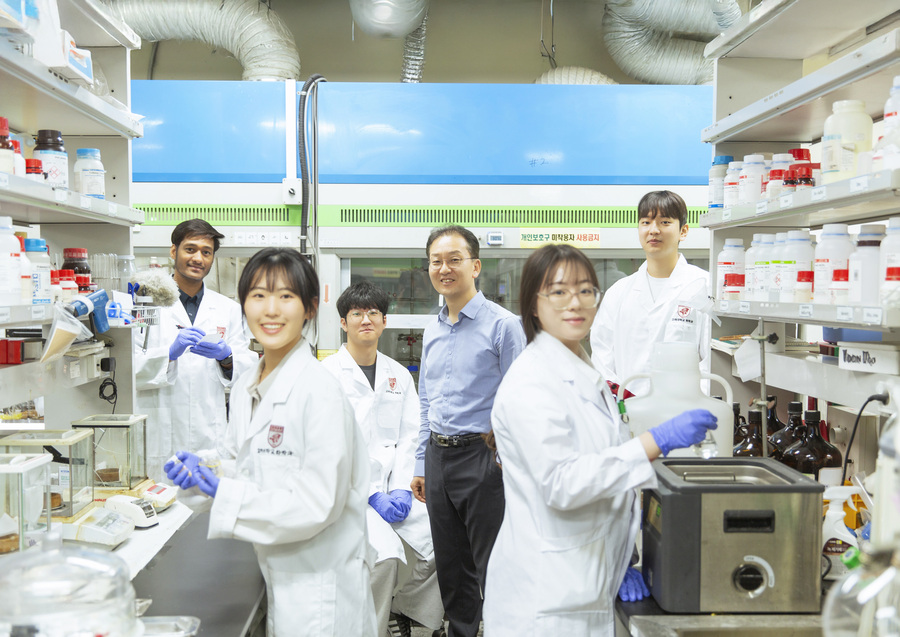
What would you like to brag about in your lab?
Jung-min: Our greatest strengths are the robust equipment infrastructure and the research environment, which allows us to explore diverse application areas. Within the broader framework of materials development, we gain numerous opportunities to explore various topics, including optoelectronic devices, energy devices, and interface research. This enables us to move beyond a narrow field and achieve diverse results through different approaches, and that’s the key advantage. Above all, the excellent support that we enjoy in terms of research equipment and experimental environments creates opportunities to try whatever we want regarding our own research interests.
Hyeong-hui: A key feature is that we simultaneously explore new research topics in line with the latest research trends. Furthermore, through the lab meetings, I can broaden my background knowledge and perspective by listening to presentations from fields other than my assigned topic.
Seung-won: What I like in this lab is that communication with my senior research colleagues is smooth. I can easily ask questions, and although I ask a lot, they all give me great advice. Thanks to them, I’ve been receiving a lot of help.
What advice would you give to someone interested in this lab?
Jung-min: Because we are working in a field that bridges basic science and applied technology, both curiosity and perseverance are required. Experiments often don’t go well, and it can take time to understand the principles involved. But once the connections are made, you will have truly rewarding experiences.
Haim: We not only synthesize organic semiconductors, but also conduct extensive research, including engaging in direct applications through collaborations. This research requires a wide range of knowledge, but if you are willing to learn and explore, your research here will be fun and enjoyable.
Hyeong-hui: In addition to the skills needed to synthesize organic polymers in the lab, it’s crucial to consistently read the latest research papers, and to possess stamina, passion, and English communication skills to effectively present your findings. Based on the findings in these papers, you can also cultivate self-directed learning skills, experimenting with various methods even when the experimental results are not what you expected.
Seung-won: Graduate school requires perseverance and stamina. Even when you face countless failures, if you persevere in your research, won’t there be a moment when you see brilliant results?