- writing date 2025.09.29
- author Communication Team
- hits 58

Salads are no longer just a side dish. For those who want to lose weight or slow down aging, salads are not about "eating less" but about "eating well". The Salady brand pioneered this new food culture in Korea. Sangwon Ahn, who founded the company in 2013, one semester before graduating from college, recalls, "At the time, there were very few restaurants that sold salads as a meal in itself." When his co-founder Geonho Lee talked about the salad culture he experienced while studying in the U.S., Ahn conceived of a brand that could expand nationwide. "As soon as I heard Geonho, I could imagine Salady stores everywhere in the country," he says. That idea has become a reality, and today Salady operates over 300 stores across the nation, expanding healthy eating into everyday life.


❶ 2008 | Ahn in the Korea University Cheerleading Squad's Flag-Bearers Team "Young Tigers"
❷ 2014 | Salady’s first store after renovation
❸ 2016 | First time attending a start-up fair
❸ 2017 | Graduation Ceremony
영Paving the Way for Business with the Passion of "Young Tigers"
Entering Korea University was a goal Ahn had harbored since middle and high school. In elementary school, his grades were in the lower-middle range, but after he set his sights on a career of entrepreneurship, he immersed himself in studying to get into the KU business administration department. "When I poured everything I had into a single goal and achieved it, I gained the confidence that I could do anything."
During his time at the university, Ahn’s activities in the cheerleading squad's flag-bearers team, the "Young Tigers (YT)", was a central experience for him. "Training for the Annual Ko-Yon Games was even more intense than military training," he says. He volunteered to join the squad in his freshman year and became a key member, training new joiners. The Ko-Yon Games, which he experienced after the grueling training, became a lasting memory.
The friends he met at Korea University were a source of motivation and inspiration. "From smart people to those with great drive and social skills, there were so many to learn from that it made me want to become a better person myself."
His father had a significant influence on his decision to go into business. From a young age, he was given books like Rich Dad Poor Dad and See You at the Top. "I would read them to earn some pocket money from my father, not really knowing what they were about. Most of them were about the philosophy of success, and although many of the ideas seemed far-fetched, they helped me dream big. My father still keeps 10 books he wants to pass down to his children."
After being discharged from the military, he joined a joint start-up club and began preparing for his career in earnest. It was then that he decided to partner with a friend from Yonsei University, and they chose selling salads as their business. "There was a rising demand for healthy food, but there were few places that offered healthy meals. I was confident that with good dressing and fresh vegetables, we could create an untraditional meal that even Koreans would find delicious."
Zero to One: Turning Points that Grew Salady
Since the market for salads as a meal had not yet taken hold in Korea, there were many hurdles to overcome. He was fully prepared, having worked at a famous hamburger chain in order to learn basic operations, but in the early days the menu and interior were not as refined as they are now. Nevertheless, there were customers who were willing to put up with this. "What would a college student know about starting a restaurant? I had to figure out everything by myself, one step at a time. Looking back, I am just so grateful to our early customers."
Another turning point came when the number of stores exceeded 100. He felt the difficulty of quality control when outsourcing food processing to other companies and decided to build his own processing plants and run his own farms. This brought new difficulties. "I remember when the factory equipment broke down, my employees and I stayed up all night to hand-process vegetables and deliver them to stores by motorcycle dispatch riders in the early morning." Even in times of crisis, he is the first to arrive on-site, and he has overcome various challenges with his leadership style of "quickly grasping the situation and solving problems together with the employees."
Just as the process of stabilizing early business operations was difficult, the rewards were also clear. Ahn recalled that the moment he successfully attracted investment was a decisive one. "I judged that we needed to secure external capital to grow Salady into a better company. It's not easy for a restaurant business to be highly evaluated, but when we received a good valuation and secured the investment, it felt like our efforts were being recognized." This recognition of its potential laid the groundwork for Salady's leap forward.
Breathing New Life into the Healthy Food Market
The menu item he is most fond of is the 'Tan-Dan-Ji Salady' (protein-carb-fat salad). He developed it from a combination he used to make for himself at the store, and even named it himself. "At first, it was just the combination I ate most often at the store. The customers were so happy with it that we listed it as a formal menu item." Although he himself used to have a sweet tooth, he was surprised by the taste and infinite possibilities of salad, and he continues to focus on developing new menu items to make salads appealing to those who don't typically enjoy them. "Many men still don't even consider eating salad. But I believe they'll be satisfied once they try it."
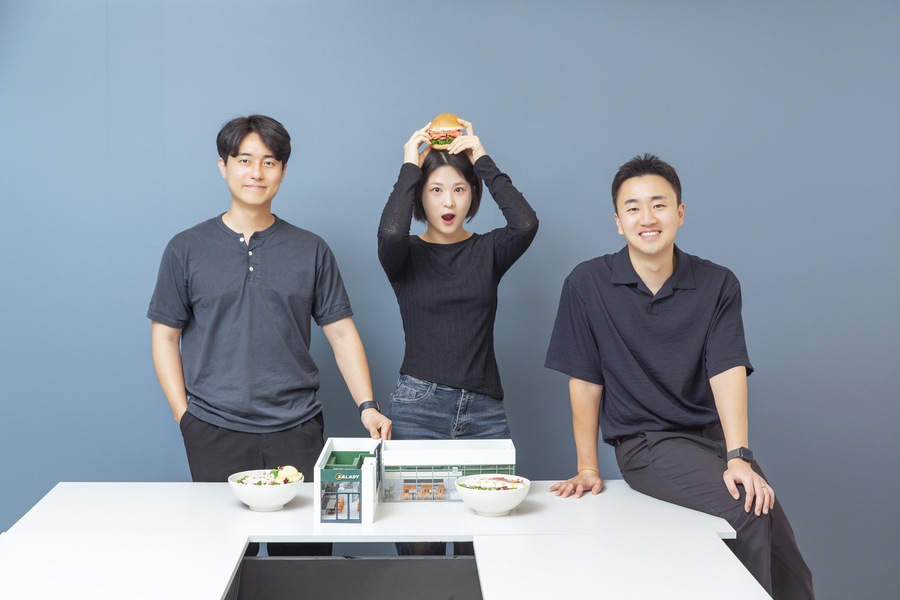
The growth of competitors in the same industry is another reason Salady can't afford to relax. "I feel it's a time when we need some new, fresh motivation. Poke brands have been gaining a lot of traction recently, and I want to surpass brands like Subway." In addition, he is looking for synergy with Downtowner, another brand he recently acquired. "The brand identities are different, but they share the commonality of being popular with the MZ generation." He plans to focus on opening Downtowner's directly-managed stores and then apply Salady's strong franchise business model to expand the brand.
Start Where Venture DNA is Alive and Kicking
To students considering a start-up, he advises, "If you're confident, try it right now." As one gets older, there is more to lose in case of failure. For those who have already started a business, he emphasizes the power of "perseverance." "If you stick with it, a moment will come when you'll grow much more than you expected. To do that, you need a strong affection for your company and a powerful will to achieve your goals." For those who lack experience, he recommends, "Start your career at a start-up or an organization with a strong venture mindset, like Baemin (Woowa Brothers) or Toss." He believes that the experience of observing and acting in a fast-growing company or market environment is a great asset for a future start-up founder.
Now in his 13th year of entrepreneurship, Ahn sometimes imagines a distant future beyond Salady. But he quickly returns to his dream of growing Salady for as long as possible. "Sometimes I have a thought like, 'Wouldn't someone else be able to do this better than me?' But then I think about it again, and I feel there is still so much more I can contribute to this brand. I try not to lose that original passion." With this attitude it seems clear that Salady is led by someone who moves fast in order to seize the opportunity for change, who stays centered in the face of problems, and who will continue to offer healthy meals to us.