- writing date 2025.08.22
- author Communication Team
- hits 63
Korea's Finest University Museum

An opportunity to see national treasures, rare materials, and modern and contemporary artworks in one place
Korea University Museum and Library have launched a special exhibition for the 120th anniversary of the university's founding, titled "120 Years of Go·Dong (高·動): Mesmerizing the Future Intellect." The exhibition features 120 artifacts, including national treasures and treasures from the museum and library collections, contained in five exhibition halls corresponding to the five characters of the university's name: Go (高), Ryeo (麗), Dae (大), Hak (學), and Gyo (校), with a theme for each hall. This exhibition is a rare chance to see all four national treasures held by the museum and library. They are the Honcheonui and Honcheonshigye (Armillary Sphere and Celestial Clock); Buncheon Sagi Inhwagukhwamun Taehangari (Buncheong Ware Jar with Stamped Chrysanthemum Design); Donggwol-do (Illustration of the Eastern Palaces); and Yonggamsugyeong, which are representative artifacts at the center of each of the Go, Ryeo, Dae, and Hak sections.
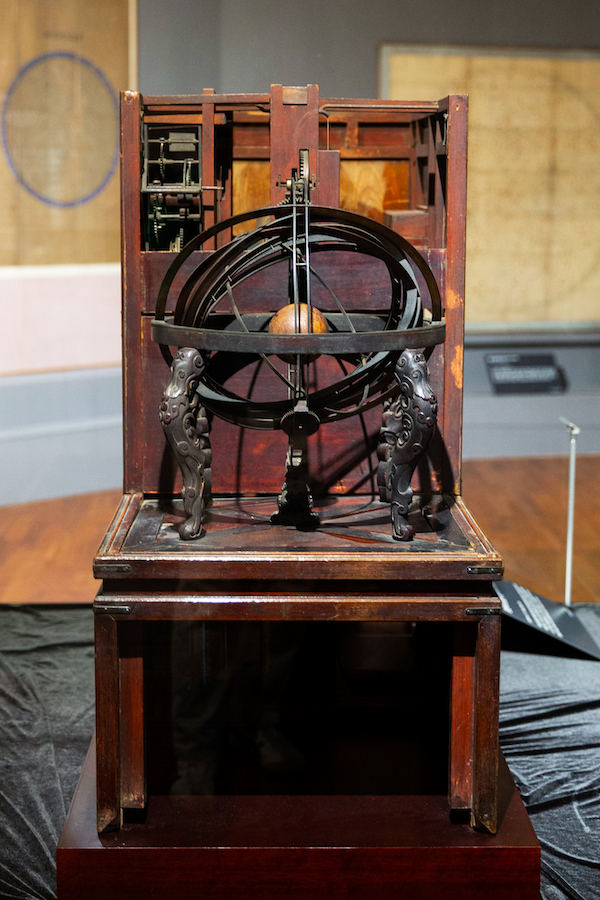
The image on the rear of the 10,000 won banknote, this is an astronomical clock that combines an armillary sphere, which uses two counterweights to reproduce the movements of the sun, moon, and stars, combined with a Western-style mechanical clock.
〈Donggwol-do (Illustration of the Eastern Palaces)〉

This is a drawing of Changdeokgung and Changgyeonggung palaces divided into 16 volumes. It not only has excellent artistic value but also serves as a crucial historical source for palace restoration work, as it contains rich information on the original forms of Changdeokgung and Changgyeonggung before they were damaged by the Japanese Empire. In this special exhibition, a replica that provides a comprehensive view of the entire work is displayed alongside the original, which is painted on silk. To ensure the safety of the original artifact, the volumes are rotated every two weeks, with three on display at any given time.
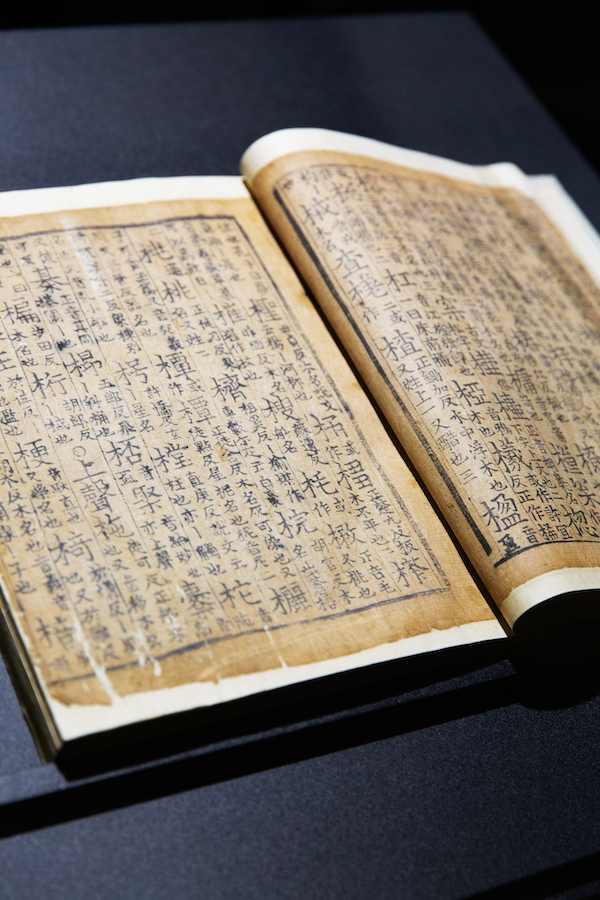
A Chinese character dictionary compiled by the Liao dynasty monk Haenggyun, it was printed on woodblocks in Naju, Jeollado Province, in the 11th century. It is an important source for the study of the phonology of the Liao dynasty, and Korea University Library has the only copy in the world.
-2-2-투명화.png "민영환의 유서")
The posthumous name of the patriot Min Young-hwan is Chungjeong (Loyalty and Sincerity). The road 'Chungjeong-ro' in Seodaemun-gu, Seoul, is named after him. The content of his will is well-known: "Even if I die, I shall not die (死而不死), and even in the netherworld, I will help my compatriots achieve freedom and independence."
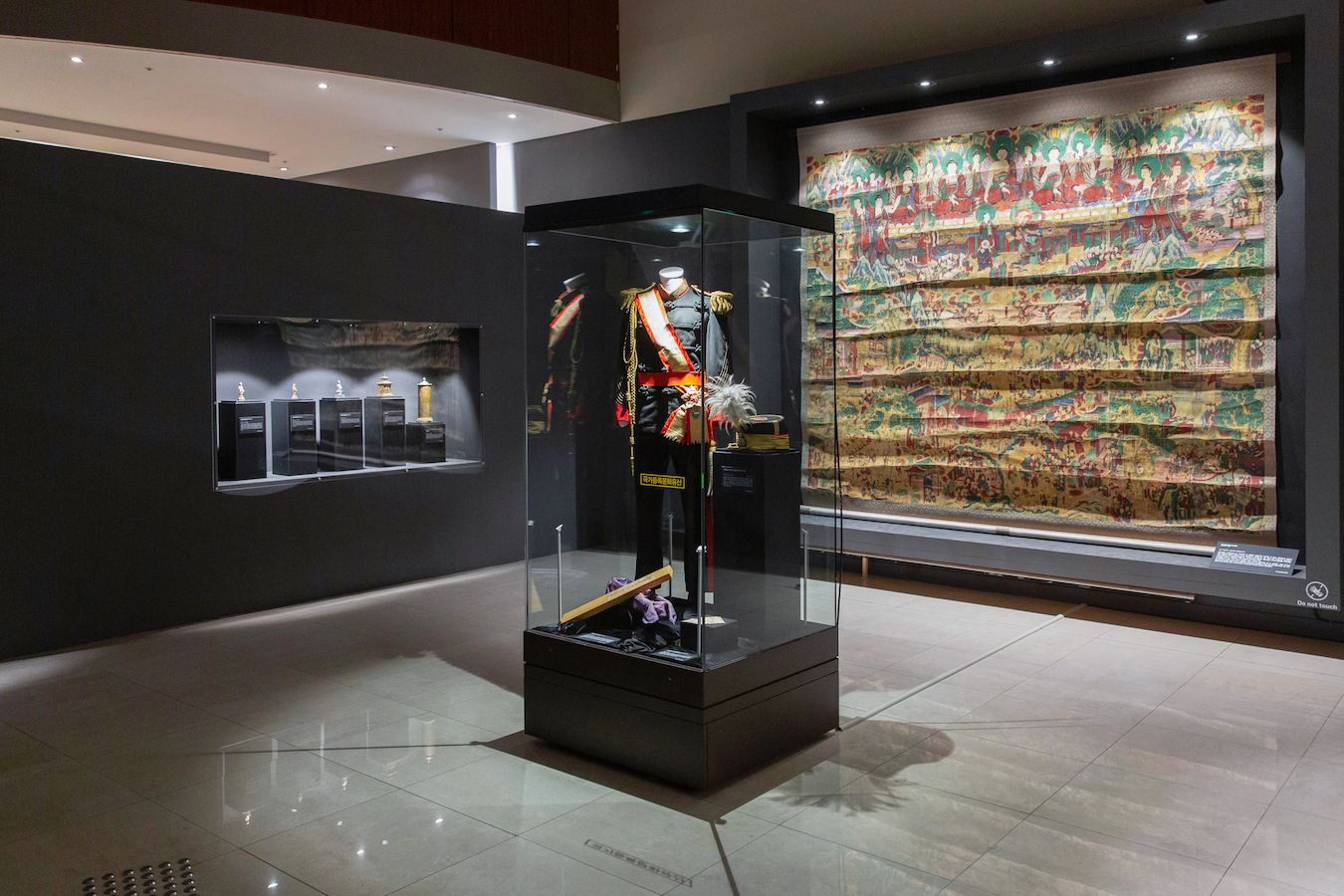
In addition, the special exhibition also displays important historical documents, including the Hunminjeongeum Unhaebon, which is being shown to the public for the first time in 90 years; the Will of Min Young-hwan, written by the patriot who took his own life in protest at the Eulsa Treaty; and the Draft of the Constitution, which is the first National Designated Record.

This is a Korean translation of the 'Yeui' section of the classical Chinese version of Hunminjeongeum. The copy is owned by the Korean linguist Seung-bin Park, and is unique in that its title is Eoje Hunminjeongeum, not Sejong Eoje Hunminjeongeum.

The first autonomous vehicle in Korea, created using a K111 military jeep. Visitors can see firsthand that the seeds of research into autonomous vehicles were already sprouting at Korea University in the 1990s.
The exhibition also features works by artists from the late Joseon period to the modern era, from Kim Hong-do's Songha Seonin Chuisaeng-do (A Hermit Playing a Flute under a Pine Tree); a portion of Jeong Seon's works; Jang Seung-eop's Jabhwa-do (Miscellaneous); Park Su-geun's Boksunga (Peach); and Kim Whan-ki's Wolgwang (Moonlight).
The materials displayed in the exhibition have been continuously collected by the library and museum since the 1930s through purchases and donations. This activity played a crucial role in preventing the outflow and loss of cultural heritage during the turbulent times of colonial rule under the Japanese Empire and the Korean war. Showcasing the fruits of these efforts is another significant focus of this exhibition.
The exhibition is also an opportunity to look back on Korea University's 120 years, which have been intertwined with modern Korean history, and to envision the next 120. Selected as one of the "48 Must-See Exhibitions" in the 2025 Korea Arts Festival, it will continue until December 20th.
This article was written with the guidance of the KU Museum Curator An So-jeong, who said:
"The more I work at the museum, the more I realize that artifacts have a unique power that can only be felt when you encounter them in person. An unprecedented number of materials have been put on display for this special exhibition. I hope you will come and experience that vivid emotion and energy for yourselves."
INFORMATION
Dates | May 1 - December 20, 2025
Operating Hours | 10:00 - 17:00 (Closed on Mondays)
Venues | Korea University Museum's 1st and 2nd Special Exhibition Halls and Modern Art Room, Inchon Gallery
Audience | Open to the Public
Price | Free Admission
Contact | 02-3290-1517
* Group docent-led tours are available for a minimum of five people. To book, please apply through the museum's website.