- writing date 2025.05.30
- author Communication Team
- hits 132
Professor Kim So-hyun and Spectrum KU (Clinical Child Psychology Lab)
Shin Ye-seul (Master’s program, enrolled in 2024)
Jeong Su-hyeong (Master’s program, enrolled in 2024)
Kim Ae-rin (Master’s program, enrolled in 2025)

When a young child’s development looks different from that of their peers, parents feel at a loss. In a reality where it is difficult to find a reliable diagnosis and effective guidance, the lack of clinical specialists in child development in Korea is an even greater obstacle. In this situation, there is a place that operates Korea’s only lab specialized in early childhood autism research. It is the lab of Professor Kim So-hyun of the School of Psychology. Professor Kim, who is in her fourth year of office this year, is continuing her research and clinical work to enable faster and more accurate diagnoses and appropriate support. Her lab, Spectrum KU, is currently conducting a cohort study (a research method that tracks and observes a group of people with the same characteristics for a certain period of time) on 120 autistic children and 120 non-autistic children. We met with members of Spectrum KU, which plays a leading role in early childhood autism research in Korea.
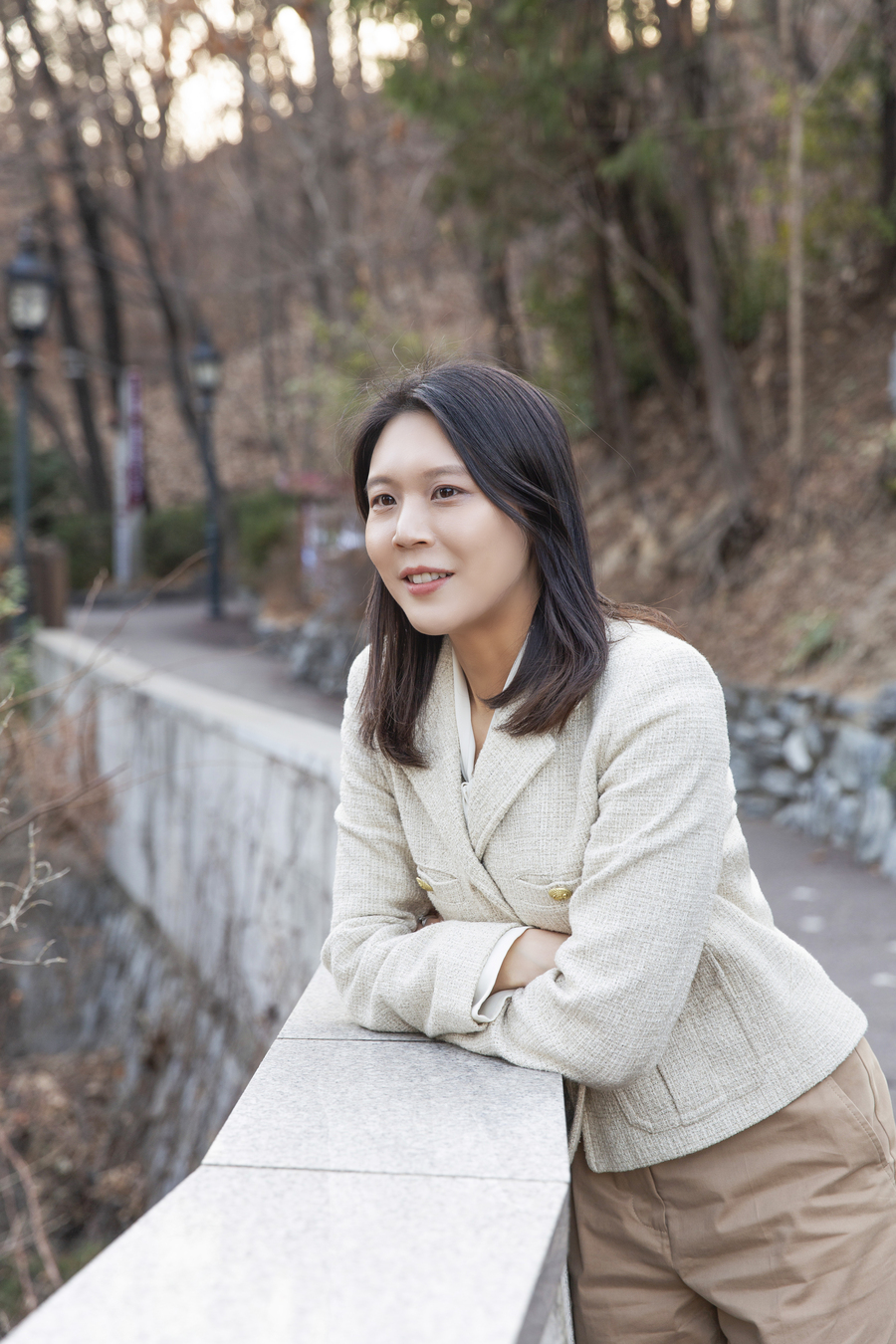
Professor Kim So-hyun
The only certified trainer in Korea, who connects research and clinical practice.
Professor Kim’s research does not stop at just diagnosis. She conducts various clinical studies to improve the quality of life of individuals with autism spectrum disorder and other developmental disabilities. Besides developing accurate diagnostic methods, she also provides education and lectures to help autistic patients and their families adapt to daily life and change social perceptions of autism. She said, “Through brain wave experiments, I am examining the relationship between autistic patients’ difficulties and their unique strengths and their brain activity. In addition, I am working on developing diagnosis and support tools that can be used in hospitals and schools by analyzing children’s behavior and language patterns using AI technology.”
Professor Kim serves as the only certified trainer in Korea for ADOS/ADI-R*, diagnostic tools that have been proven effective worldwide as early intervention methods for autistic infants and toddlers. After serving as a professor at Cornell University School of Medicine for seven years, working on research and clinical trials, she joined Korea University in 2022. Her lectures were so well-received by KU students that she won the Seoktap Lecture Award from her first semester. She said, “My first impression of Korea University students was that they were very academic. Thanks to the passionate students, there were in-depth discussions and questions in every class, which made the lectures livelier.”
Finding Infinite Possibilities Within a Diverse Spectrum
When she was a child, Professor Kim saw that one person’s difficulties could become a burden to the entire family through family members and acquaintances with psychological problems. Through this, she realized early on that the problems of these people could not be solved through individual dedication alone and they desperately needed structural support. She said, “I wanted to contribute to building a system. While studying abroad under Professor Cathy Lord, a renowned autism researcher, I entered the world of autism research and clinical practice. As I continued my research, I wanted to understand autistic patients and their families more deeply and provide them with practical help.”
Professor Kim’s lab currently consists of 15 researchers. In a rapidly changing research environment, she considers flexibility, energy, and teamwork as the core values of lab operations. She said, “My lab is looking for an all-round player, a researcher who can flexibly learn and take on challenges across multiple fields. In addition, I believe that good research and clinical practice ultimately come from good teamwork, and thus, it is most important to have an attitude of helping and caring for each other. My lab’s core value is to create positive changes in the lives of autistic patients and their families based on this cooperation.”
Professor Kim focuses on discovering the various possibilities of autistic children and helping them develop their social skills. Her efforts to develop more accurate diagnostic methods and effective educational programs are bringing about practical changes in the lives of autistic people beyond academic achievements.
Let’s Talk About Spectrum KU
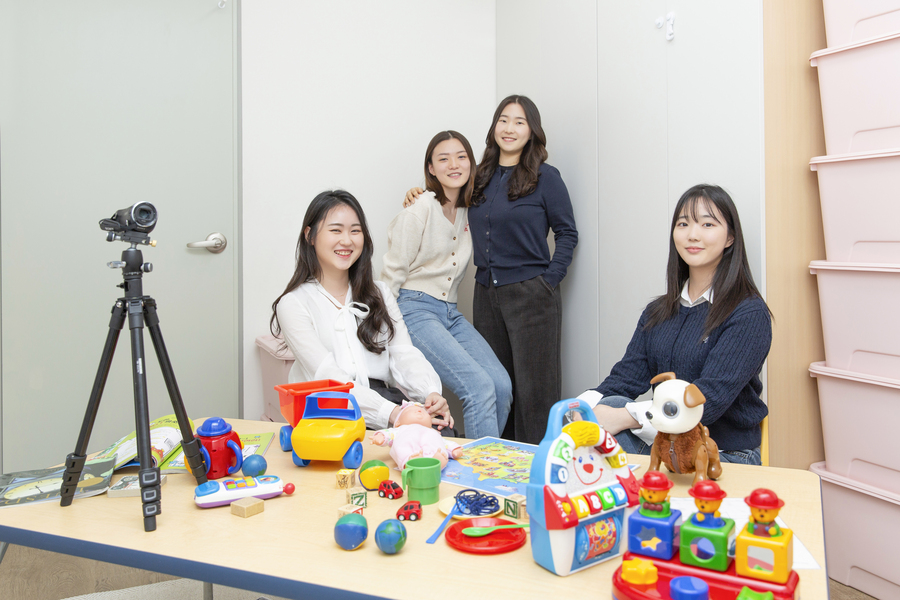
Spectrum KU Researchers
Tell us about your role in the lab
Ye-seul: I am in charge of scheduling child testing for the NEST Project, a longitudinal study in the lab. I am also involved as an interventionist in the MONSI (Monitoring System for Social Interaction) coding lead and executive function improvement program that analyzes the changes in symptoms before and after treatment for autistic children.
Su-hyeong: I collect and analyze brainwave data from school-aged autistic and non-autistic children and autistic adults, and conduct research on executive function prediction and symptom-based clustering. I am also involved in research related to neurodiversity awareness, including translation of educational materials about improvement in the perception of autism and establishment of an intervention awareness survey.
Ae-rin: I am conducting research on executive function intervention programs for autistic children aged five to seven years, and measure the effectiveness of the program through individual and group intervention sessions.
Eun-sil: I support the operation of the lab and am in charge of scheduling, managing supplies, and communicating with parents of participating children.
Why did you choose this lab?
Eun-sil: I was very interested in child psychology, and Professor Kim came to our school when I was a senior. After taking her classes and working as an undergraduate intern, I thought, ‘It would be great to do research under this professor.’ I am the first student of Professor Kim.
Ye-seul: I can still vividly remember how much I looked forward to attending Professor Kim’s class. The latest trends in autism research and neurodiversity introduced in her class were so interesting!
Su-hyeong: While I was thinking about diversity-related topics after entering college, I had an opportunity to attend a lecture by Professor Kim. During that lecture, I thought that I wanted to contribute to the expansion of research in this field.
Ae-rin: I met children with various neurodevelopmental disorders in the pediatric psychiatry lab and became particularly interested in autistic children. While I was thinking about going to graduate school, I attended Professor Kim’s workshop and became assured that I wanted to study this field more deeply.
Tell us about your lab life
Su-hyeong: One of the main tasks of our lab is to recruit research subjects and conduct various tests. During the experiment, we receive clinical assessment guidance from Professor Kim, and directly experience the heterogeneity of ASD (Autism Spectrum Disorder) through meetings with diverse autistic people. The experiment involves a comprehensive process, including recruitment, screening, scheduling, evaluation, data management. It is a very time-consuming process as one experiment takes four to six hours and requires two researchers. In addition, using tools developed by Professor Kim, I code and analyze the play activities between children and their parents. Through weekly lab meetings and individual meetings, I receive personal research guidance from Professor Kim. During the semester, I gain clinical knowledge from various major course classes.
Ae-rin: I have an average of two to three testing schedules in a week. My work hours are flexible, so I work in the office when I don’t have testing schedules or classes. I also work from home when I have Zoom meetings or intervention sessions.
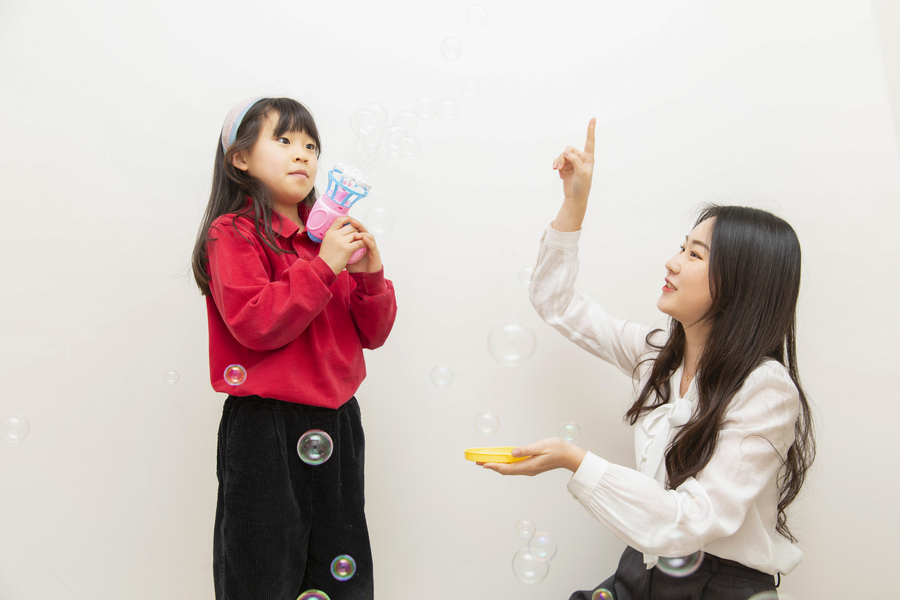
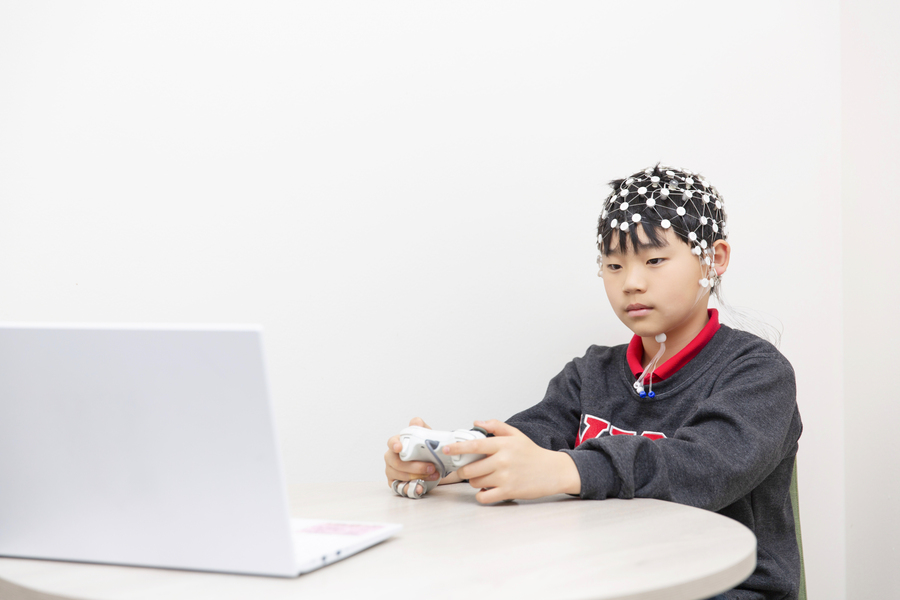
Spectrum KU provides accurate and comprehensive diagnosis and evaluation using standardized testing tools, such as play-based experiments and brainwave examinations.
Who is the mood maker of this lab?
Ye-seul: All of us!
Ae-rin: When Ye-seul is around, there is laughter everywhere. We often burst out laughing at the pictures or emojis she posts in the chat room.
p>Eun-sil: Everyone is active and fun, but I want to pick the most extroverted person in our lab, Professor Kim! She not only remembers every little habit or characteristic of each lab member, but also notices even small events or changes and says something to us. I think she is the best mood maker in our lab!Tell us about memorable episodes from the lab
Ye-seul: A child I treated and his mother visited me recently. The mother was so frustrated because her child lacked emotional control, cognitive flexibility, and inhibition in daily life, but she said that he has grown a lot through our intervention program and she is not worried about him entering elementary school any more. At that moment, I realized, ‘This is what the professor was talking about as our role as clinicians!’
Su-hyeong: Personally, I remember the first time I analyzed research data last fall. Although it was a short period of about a week, it was difficult for me because it overlapped with the exam period. However, thanks to Professor Kim’s intensive guidance, I was able to submit my analysis on time without any problems.
Is there anything you would like to say to students who wish to join Professor Kim So-hyun’s lab or this field?
Eun-sil: Our lab will give you a sense of pride in making a positive contribution to autistic children, adults, and even society. Above all, the lab atmosphere is really great. Just like in the game Animal Crossing, we are always considerate of each other, share tasks, and cooperate with each other.
Ae-rin: I think perseverance and physical strength are also important. In this lab, how much you learn depends on how much you put in.