- writing date 2025.05.30
- author Communication Team
- hits 128

As the leading specialized medical institution in the infectious disease field, Korea University Guro Hospital has dedicated itself to protecting the health of the people in every infectious disease emergency, such as the swine flu, MERS, and COVID-19, at the forefront of danger. In particular, Korea University Guro Hospital was the first among the advanced general hospitals to accept MERS patients, and was designated as a MERS-safe hospital and a COVID-safe hospital, taking the lead in responding to crises to protect patients. Recently, it has gained widespread attention as the first and only severe trauma specialist training center in Korea. We met Professor Cheong Hee-jin, who has been guiding the hospital with strong leadership whenever the health of the people is threatened.
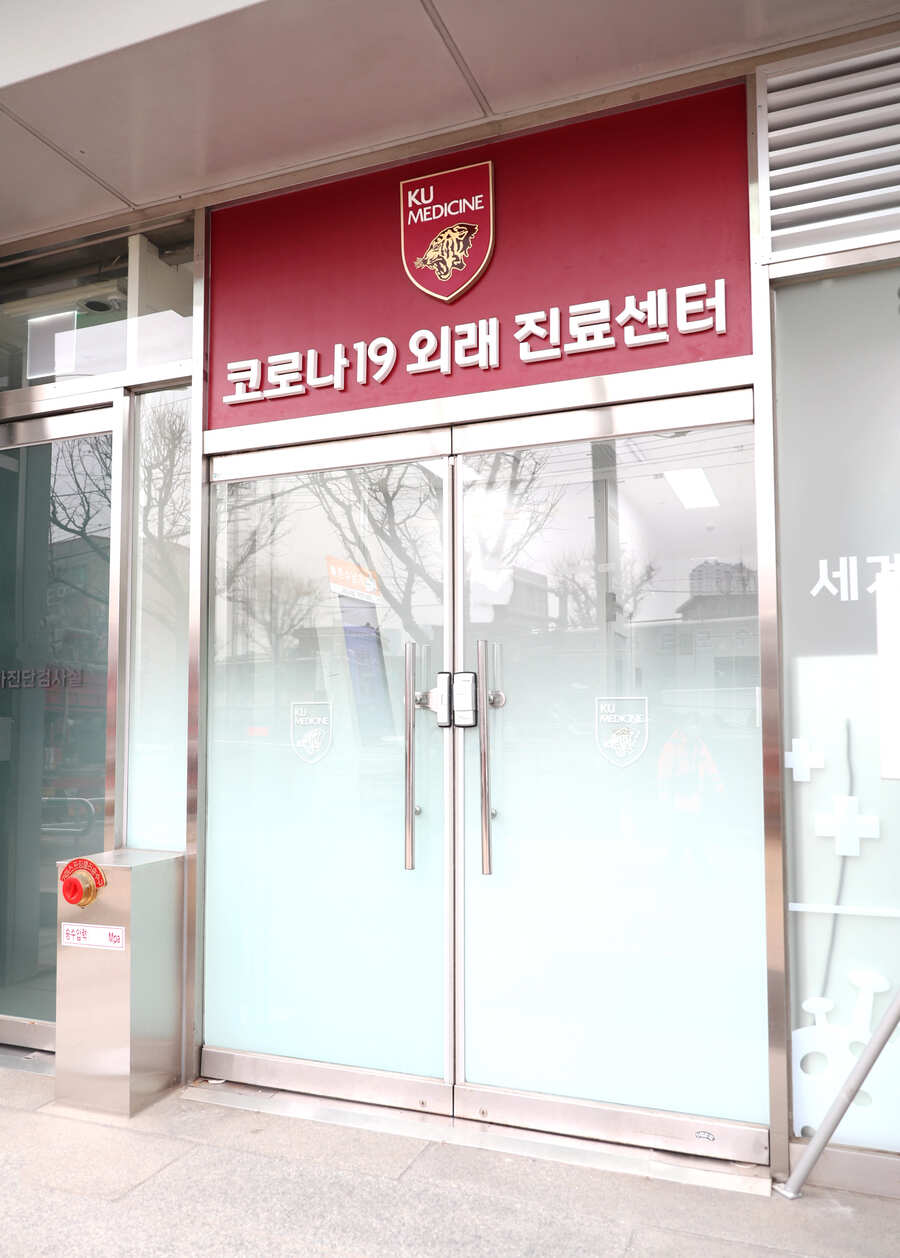
COVID-19 Outpatient Clinic Center
In every infectious disease crisis, Korea University Guro Hospital has been at the forefront. Have you had any difficulties?
I think it was during the MERS outbreak that the public first realized the role of Korea University Guro Hospital in dealing with infectious disease crises. At that time, we quickly prepared a negative pressure isolation room and accepted MERS patients before any other advanced general hospitals. It was a very bold decision by the hospital director, which was made after reached a consensus that Guro Hospital should play a role in the national crisis. Of course, the patients and even the staff were all anxious, and it was difficult to persuade the staff and get the patients to understand. At the same time, we had to hold countermeasure meetings early every morning and late at night, preparing to receive patients transferred from all other hospitals. It was a difficult process without any holidays, but it was also rewarding. As the first MERS National Safety Hospital, Korea University Guro Hospital completely controlled the inflow of MERS into the hospital by setting up a quarantine outpatient clinic and negative pressure isolation beds.
I vividly remember the fear of MERS, which had a high fatality rate.
Everyone worked hard, especially my colleagues in the infection control room. As the director of planning at the time, I was in charge of sharing real-time situation reports and establishing countermeasures in a group chat room where all the hospital department heads gathered. I remember that we encouraged each other, saying “We are righteous soldiers now. We must protect our country.”
The moment when we decided to take the lead and solve the problem ourselves even though other hospitals said they wouldn’t do it was very…it was a memory that made us emotional. Professor Kim Woo-joo and other colleagues at the Department of Infectious Diseases at Korea University Guro Hospital have shared their opinions with doctors at other hospitals and have served as civilian advisors to the government, including the Korea Centers for Disease Control and Prevention and the Ministry of Health and Welfare, in each infectious disease crisis, such as SARS, avian influenza, and swine flu, since the early 2000s. It is reassuring to see that the comrades who called each other righteous soldiers at that time are scattered across various hospitals and working hard to control infectious diseases. I think this experience gave me the confidence and fortitude to overcome any future pandemic.


COVID-19 Vaccine Clinical Trial (Left) and COVID-19 Patient Care (Right)
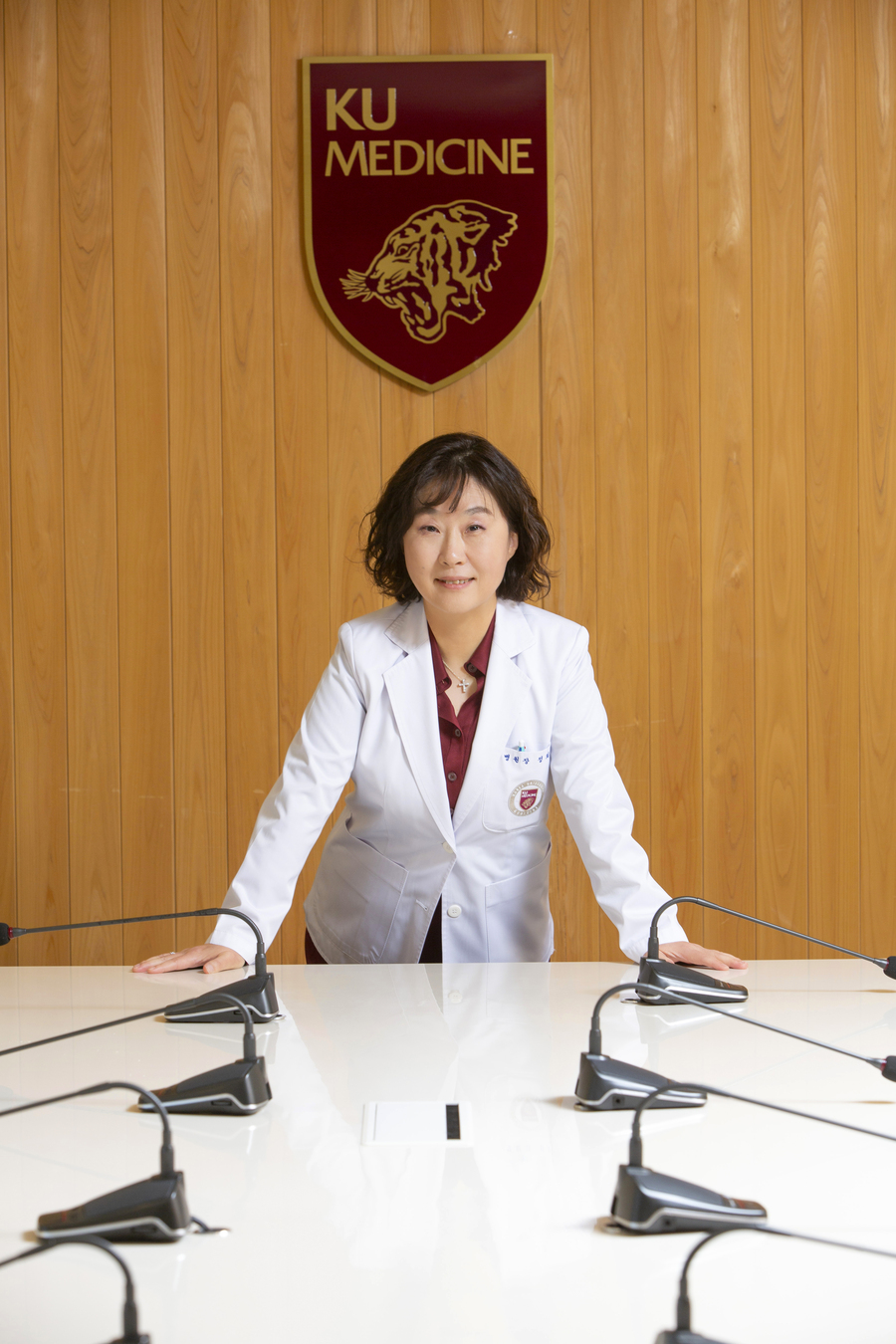
“I remember that we encouraged each other, saying ‘We are righteous soldiers now. We must protect our country.’ We decided to take the lead and solve the problem ourselves even though other hospitals said they wouldn’t do it.”
How was it during the COVID-19 outbreak? Was anything different from before?
Some things have changed, and some things are still regrettable. The government has greatly improved the infectious disease epidemiology investigation and early response system since the MERS outbreak. However, MERS and COVID-19 are very different diseases. In the early stages of an epidemic, no one knows what the disease actually is, people can only make a prediction. So, in the early days of COVID-19, I said “It’s not appropriate to call someone a COVID expert yet. There are no such experts right now.” In the process of researching, those who are prepared are able to predict more quickly and reduce confusion a little. It is important for researchers to reach a consensus and speak with one voice. In other words, it is risk communication. I think this was very weak during the MERS outbreak, and it got a little better during the COVID-19 outbreak. Since accurate communication is crucial when it comes to infectious diseases, Professor Kim Woo-joo has made a great effort to communicate with the public in simple and accurate language through numerous broadcast channels and YouTube.
The name of Korea University Guro Hospital always appears in places where a social role is needed, including the Training Center for Severe Trauma Specialists that has recently become an issue.
In 1983, with a loan from the German government, KU Guro Hospital was founded with the mission of taking responsibility for the health of industrial workers in the Guro Industrial Complex, which was then a medical blind spot and underdeveloped area, and practicing medical welfare for the medically disadvantaged. Now, the number of hospital beds is nearly four times larger than before, and we have made tremendous progress, including being selected as a national research hospital in 2013, but it seems that the DNA from back then is still alive within us. The slogan for the 40th anniversary of Korea University Guro Hospital has been set as “Closer to your heart, a new path in medicine, and the voice of society.” This slogan with three key phrases was decided after many meetings between hospital leaders. It shows the direction we are pursuing, rather than the target size or ranking of the hospital. “Closer to your heart” refers to a culture of mutual respect, “closer to a new path in medicine” refers to our goal as a nationally designated research hospital to contribute to humanity through specialized research fields, and “closer to the voice of society” refers to the belief that we must remember our innate mission.
.jpg "중환자실의 의료진")

Medical Staff in the Intensive Care Unit (Left) and Prospective Trauma Specialists Training at the Training Center for Severe Trauma Specialists (Right)
Is it in that context that KU Guro Hospital is the only hospital that has the Training Center for Severe Trauma Specialists? People say that you participated in the initial planning of the center. Actually, isn’t this somewhat impractical from a hospital management perspective?
Eleven years ago, I was serving as the planning director of KU Guro Hospital, and the person who proposed to create the Training Center for Severe Trauma Specialists was Professor Oh Jong-Geon of the Department of Orthopedics. He proposed that we bring in a trauma specialist professor from Jeju Island and train trauma specialists. It is not a profitable business, but it is so important to train trauma specialists. After hearing this plan, the then director of KU Guro Hospital Kim Woo-kyung said, “Our hospital was established in Guro to fulfil its innate mission of contributing to society, so we have to do it even if it doesn’t make money,” and I agreed with him. We began to work on it, thinking that this was something we could do well, so let’s give it a try, rather than thinking that it would not be profitable, and it has already been 11 years.
Recently, there was a crisis where the training center almost closed, wasn’t there?
There were many difficulties on site, so support from various departments was needed. Despite the effort and expense put in, there were major practical problems. However, the consensus that we should maintain the training center since it also has a symbolic meaning that shows the mission of our hospital may have been passed down through all the former hospital directors. Trauma specialists look cool on TV, but in reality, not many people apply for the job due to its difficult and demanding tasks. However, there has been a steady stream of applicants in our hospital, and almost 20 trauma specialists are from our hospital already. They are now leading trauma centers in various places. When we faced a wall of reality and thought, “Should we really take a break now?”, a TV drama about a trauma center miraculously became popular, and the city of Seoul showed great interest in us, so thankfully, we were able to continue the training center.
What kind of student were you?
I was just an ordinary model student, so there is no interesting story (laughs). I really like science. When I was serving as the class president in middle school, I thought to myself about what I could do for our class as a class president, and I decided to help students who had difficulty with science. So, a completely voluntary Science Extra Study where I taught and my classmates learned started. It was fun to teach, and above all, my class mates all did well on their next exams. Even right now I can clearly picture classroom where we studied together at sunset and the scenery outside the window.
What does KU Guro Hospital mean to you?
Isn’t that my life itself? As all hospital staff do, I come here as soon as I wake up and spend the whole day here. I only have enough time to organize my day at home, and my daily life is really centered around the hospital. Taking care of patients is important, but I have to be in school because it is a space for the mission of nurturing younger doctors who will be able to take care of patients better in the future and helping more patients based on more profound academic knowledge. Since my residency days, Korea University Guro Hospital has been a dynamic hospital that had a smooth communication system, and a good environment that fostered cooperation and allowed workers to try anything. I liked Guro Hospital from then on.
Have you ever faced any crisis while continuing your medical career?
As a working mom, there were moments of difficulty, especially when my child was young. People around me gave me advice, such as “You are not the only one, and it will all pass. Try reducing your workload a little.” The thought that I wasn’t the only one struggling and that this hardship would pass helped me endure. My husband also did his best to help me work comfortably. I tried to be relaxed, thinking ‘there are things that I can’t handle.’ Even now, there are many people, whether they are men or women, who are suffering from difficulties. However, with the help of people around them, they can overcome the hardships and become stronger colleagues. The most valuable thing to me is people. I think I am doing well at work thanks to the nice people around me. I should be that kind of person to others.
Do you have any dream for KU Guro Hospital, the place where you have devoted yourself for such a long time?
I always think, ‘Guro Hospital is a place where people together.’ We have tried to create a culture where the medical staff respect patients, patients respect the medical staff, and employees respect each other. I hope that the culture of respect, where people show sincerity and respect to each other, will spread more. We have done well so far, but I think the future will be more important. I also hope that Guro Hospital’s legacy of not sparing itself from social demands will be well delivered to its staff, patients, and society. I would like to see Korea University Guro Hospital recognized everywhere as a hospital that practices the values that society demands as an advanced general hospital. In addition, since we were first designated as a research hospital by the government in 2013, we have built up outstanding research capabilities. When I was in medical school, my dream was to become a medical scientist. So, I encourage anyone to jump into the field of medical research and encourage young doctors to go ahead and dive into the research they want to do. I hope that more people will have the dream of becoming a medical scientist as I originally dreamed of, and that accordingly there will actually be famous medical scientists. This will eventually benefit the patients.Professor Cheong Hee-jin ...
Professor Cheong Hee-jin took office as the 20th director of Korea University Guro Hospital in November 2021, at the peak of the chaos caused by the pandemic. She is the first female hospital director in the 40-year history of Guro Hospital. For three years, including two consecutive terms, Professor Cheong has been steadily carrying out major tasks, such as overcoming the pandemic and returning to normal life. Professor Cheong is a member of the so-called Team Kim Woo-joo, which has served as a think tank for health policies in every critical infectious disease epidemic such as MERS and COVID-19. Infectious disease experts at Korea University Guro Hospital, led by Professor Kim Woo-joo (Vaccine Innovation Center, Korea University College of Medicine), who is considered the top infectious disease expert in Korea, participated in the government’s immediate response team and did their best to prevent the spread of infectious diseases and bring an early end to the situation.
Korea University Guro Hospital, the best medical institution in Korea, has protected Korea in every new infectious disease crisis:
-Development of the world’s first quadrivalent cell-culture influenza vaccine
- -Operation of the swine flu Pan-Ministry Project Team for 6 years
- -General Manger of the only vaccine development center run by a private institution in Korea
An advanced general hospital specialized in severe diseases, equipped with excellent medical staff and systems:
-The first and only Training Center for Severe Trauma Specialists in Korea-High-risk maternal birth rate 78.5%
Research hospital with world-class clinical trial capabilities
-620 intellectual property rights registered3,925 published papers (as of October 2024)
-The world’s first acquisition of ISO14155 among general hospital-level or higher medical institutions