- writing date 2025.05.20
- author Communication Team
- hits 120
.jpg "우준호 대표")
“A philosophy that puts people before numbers; a sense that prioritizes relationships over transac-tions.” Mr. Woo believes that M&A isn’t about buying a company, but about saving people. After 15 years of hands-on experience in operations, leadership, fieldwork, and strategy at E-Land, he founded the M&A specialist firm Woo & Partners, where he is redefining negotiation and deal-making on his own terms. His story recently inspired the JTBC drama, ‘The Art of Negotiation’ and is drawing atten-tion as a compelling example of bringing human warmth into the world of business.

The one who knocked on the club’s door on their very first day.
Until high school, he was a typical model student. “I was class president, the teachers liked me, and I studied hard,” he recalled. But it wasn’t until he entered college that he realized, “That wasn’t who I really was.” On the day of the entrance ceremony, he personally knocked on the door of the Christian club room at Korea University. “Looking back, it’s a little strange. These days, hardly anyone visits a club on their very first day of school.” At the heart of his college life was, without a doubt, the club. Rather than simply following a set path, it became his first real stage, one he created for himself.
Although he had initially hoped to major in Political Science and International Relations, he found himself naturally drawn to the practicality and potential of business. He enrolled in the Department of Business Administration at Korea University and soon realized the field was far more dynamic than he had imagined. “What attracted me was that it was directly connected to the real world. I could im-mediately apply what I learned,” he said.
While he learned management theories in the classroom, he gained just as much hands-on experience practicing leadership at Korea University. When he became the president of the club he had joined on his very first day, it naturally became a stage for practical management. “If you compare it to a com-pany, it was an organization with no budget, no promotions, and no formal authority. But I had to me-diate conflicts among people who had come together voluntarily and build a shared vision. That, to me, was real management training.”
His nickname from this time was also unique. “I actually gave myself a nickname back then, ‘Hand-some President.’ I called myself that, almost as a joke, to make it easier for people to approach me.”
The club room became like his second home. After school, they played basketball together, and at night, they all went to the PC room to play games, laughing and chatting. “Back then, even though there wasn’t much to do, it was still fun. Hanging out in the club room, going to a PC room, playing basketball, playing billiards... that was everything.” It was a school life that balanced both seriousness and a sense of fun. "A truly great negotiation is one where everyone can laugh together. Negotiations that save lives - that's why I keep doing this."
Sense beyond numbers, that’s M&A
When he first joined E-Land, he applied for a position in strategic planning. However, during the hir-ing process, he shifted his focus after learning that the M&A team was hiring for the first time. The turning point came from a single line spoken by the executive who was interviewing him: “We don't buy companies, we save them.”
“When I heard that, I thought, ‘That’s amazing.’ I knew I wanted to try something like that.” He joined the M&A team as a new hire and eventually grew into a key practitioner, managing numerous M&A projects.
But as his work deepened But as he got deeper into his work, concerns began to surface. “How does what I do contribute to society?” With that question in mind, he requested to step down from the M&A team after nine years and move into a hands-on role in the field. “I was transferred to the hotel business department, and for the first six months, all I did was wash dishes, clean, and put away dish-es. Until then, I had only seen management through numbers, but that was my first real experience in the field.”
After working in the field, he expanded his overall business acumen by working in various depart-ments, including the fashion division. These experiences had a decisive influence on his rethinking of M&A. "I could feel the real sense of how the business operates with my own hands."
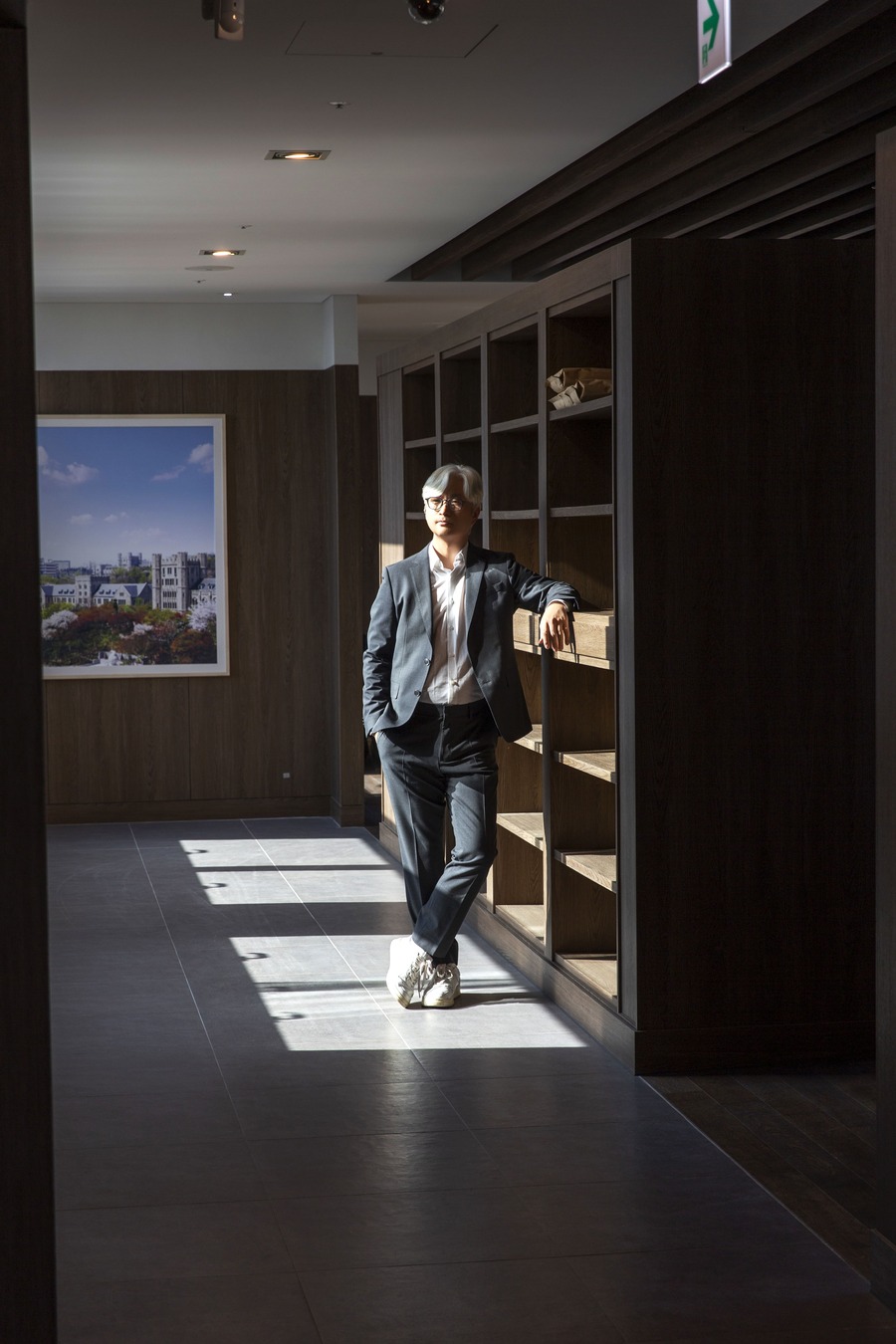
Breaking away from the speed of large companies to create a platform himself.
In 2019, he was shocked by Musinsa’s online shopping platform. “Why doesn’t our company try new things?” he wondered. He was growing frustrated with the structure that prevented large companies from being as agile as startups.
Ultimately, he established a Corporate Venture Capital (CVC) organization within E-Land, aiming to invest in and nurture startups. However, the speed of the organization did not align with his expecta-tions. “I realized we were on different paths. That was the end of my 15-year career at E-Land.”
After submitting his resignation, he took a six-month break, determined to do nothing. He spent a month in Jeju Island with his family. “I found peace during that time. And then, out of nowhere, I thought that I should start my own business.”
처He didn’t have an idea from the start. Instead, he decided to start fresh by focusing on what he did best, M&A. Whereas before, his negotiations were on behalf of the company, now he wanted to nego-tiate for the benefit of all parties involved. “Ultimately, this job is about helping people find what they want. If things go well, you might even become friends with that person. That’s the kind of negotiation I want to have.”
His criteria for selecting clients are also clear. “I’m very selective about people. I don’t want to work with companies that are only after money. It’s more important to me to work in a way that aligns with my values.”
He returned to the field he knew best, but this time, with a new approach. He began to focus on human trust, rather than just the interests of the company.
.jpg "이탈리아에서 클라이언트와 함께 클로징을 기념하며")
.jpg "프랑스에서 회의하는 모습")
A real negotiation is one where you remain friends even after it's over.
Mr. Woo emphasizes that what truly matters in M&A is not technology, but ‘sincerity’ and ‘consisten-cy.’ Only when your words and attitude remain unwavering until the very end can you gain trust, even in the final moments. “You have to stick to the same words, the same gaze, and the same standards from start to finish. Then, at the final moment, people will trust what I say. That’s real power.”
Guided by this philosophy, he has personally led and completed 15 domestic and international M&A and sales projects to date. Transaction sizes range from a minimum of $2.5 million to a maximum of $550 million, with the total cumulative transaction value reaching approximately $1.3 billion.
Among these, the negotiation that left the greatest impression on him was a project where both sides held a ceremony after the deal, crying and expressing gratitude to one another. “In most deals, one side usually feels like they’ve been shortchanged, but that time, everyone was genuinely satisfied.”
In another negotiation with a Chinese company, he was unexpectedly asked to reduce the price by 30 billion won on the day the contract was to be signed. Without hesitation, he ended the negotiation right then and there. “I told them, ‘Take all your lawyers and go home.’” However, negotiations re-sumed two weeks later on the original terms and were ultimately concluded without incident. “Nego-tiations can only be concluded if you have a sense that they will actually return. I had that feeling, and they did come back.”
In the face of temptations, don't lose yourself
There is one thing he would like to say to his juniors who aspire to work in M&A, investment, and finance: clarify your values regarding money. "There are many temptations in this job. I've seen people who accept hospitality or let things slide without any clear standards. I believe it was my faith that helped me overcome those temptations. It's difficult to manage with just mental strength."
Mr. Woo never enters into negotiations with any client unless he can fully convince them of the sale price. “Mr. CEO, I believe your company’s value is appropriate at 70 billion. If you want to sell at that price, leave it to me. If not, I don’t think I can proceed.” It’s not about taking sides, but about finding a way for both parties to sit side by side. A deal where everyone is satisfied—that, I believe, is a truly great deal.”
His negotiation philosophy also served as the inspiration for the currently airing JTBC drama, The Art of Negotiation. As the real-life figure behind the story, Mr. Woo has continued to explore how ‘M&A that saves people’ can be brought to life. “I had many conversations with the writer about ‘warm capi-talism.’ I hoped the drama wouldn’t just be a story about corporate takeovers, but a story about saving and connecting people.”
According to him, negotiations can be a warm strategy rather than a cold war. Having lived a reality more compelling than fiction, he has navigated countless M&A deals and established himself not just as a skilled negotiator, but as a bridge connecting companies. His future direction is clear: he continues to experiment, determined to prove that human-centered capitalism can be a reality. A business that goes beyond simply ‘buying well and selling well’, a business that saves people through good deals. This is the new order that Jun Ho Woo is building.
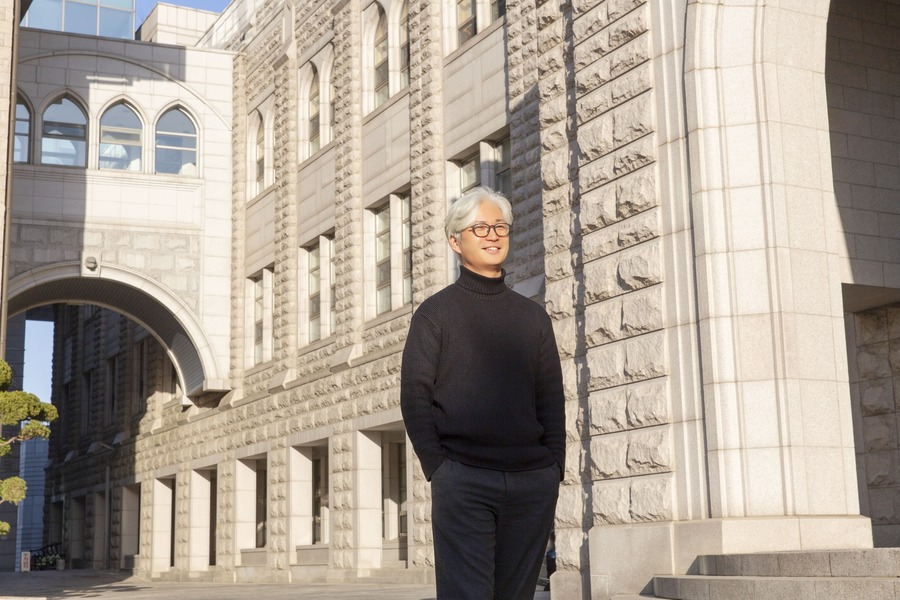
"A truly great negotiation is a deal where everyone can smile together. A negotiation that saves people—that's the reason I keep doing this work."