- writing date 2025.05.20
- author Communication Team
- hits 129

Professor Noh Jun-hong was selected as a Highly Cited Researcher (HCR) in 2024, marking his sev-enth consecutive year being named an HCR in the Cross-Field category. The HCR list is compiled annually by the global information analysis company Clarivate and is based on the top 1% of papers with the highest number of citations worldwide. Being selected as an HCR means that the researcher's work is recognized as representing a fundamental technology in the relevant field and that the tech-nology is drawing significant attention in the current era.
Researching perovskite, a new paradigm for solar cells
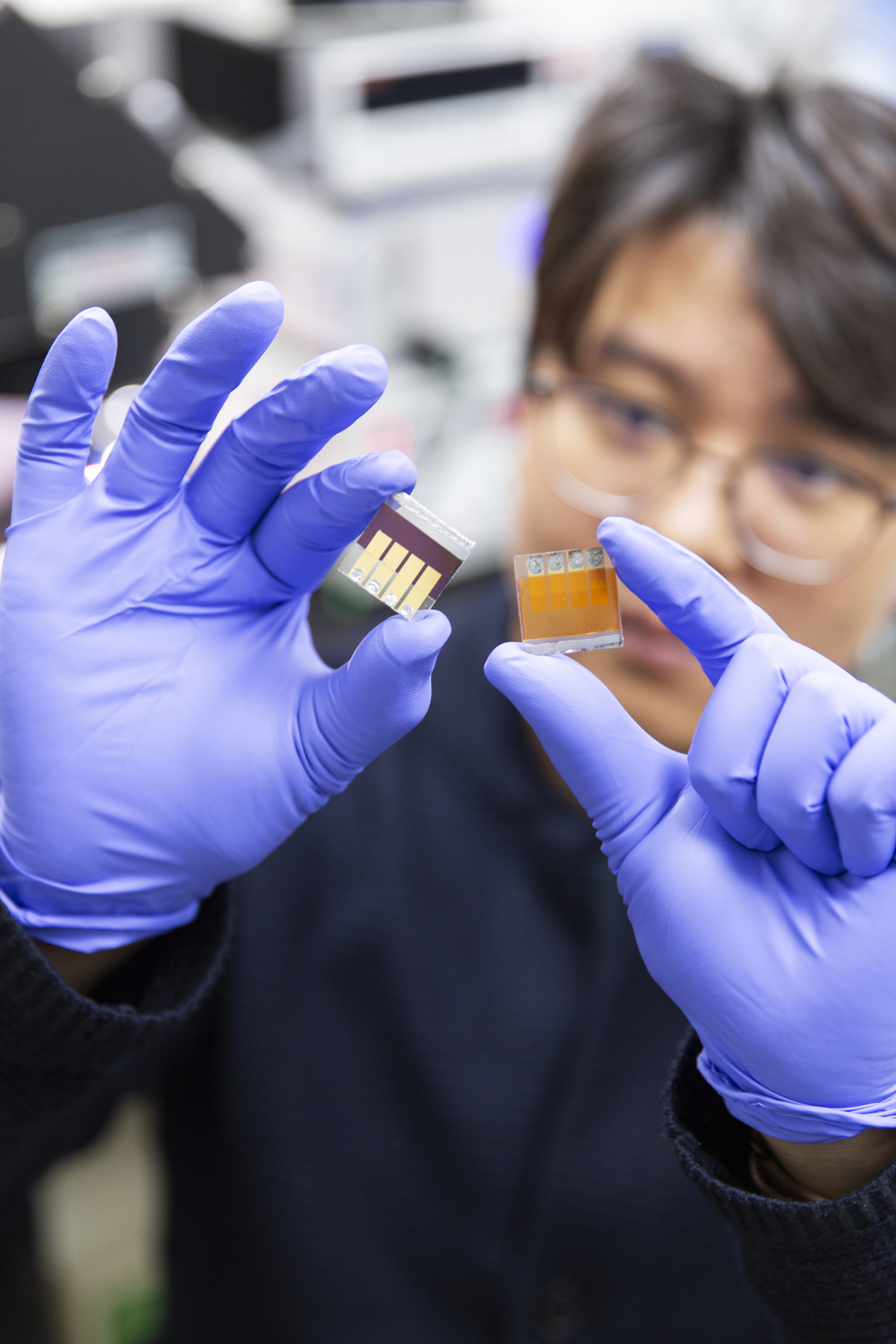
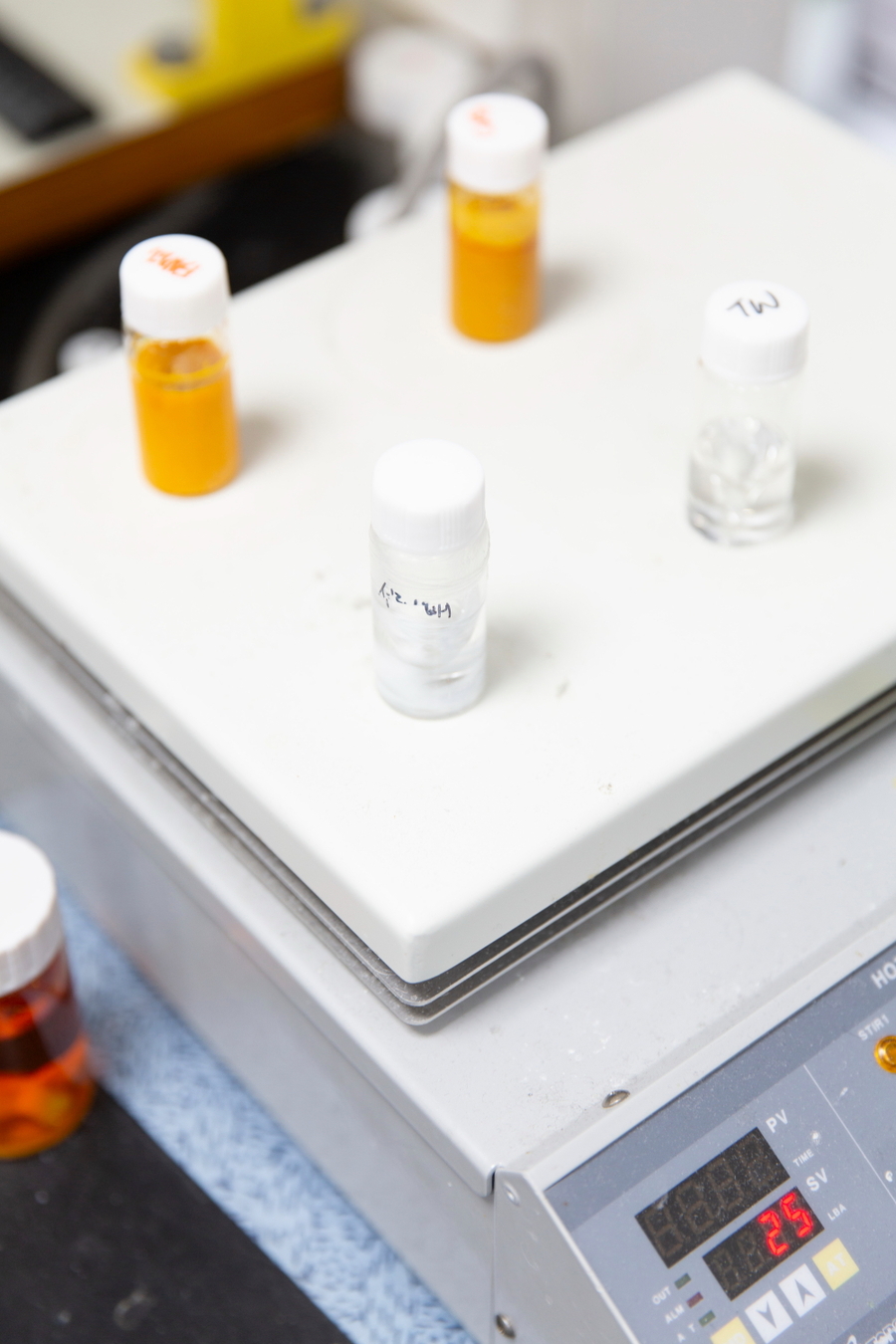
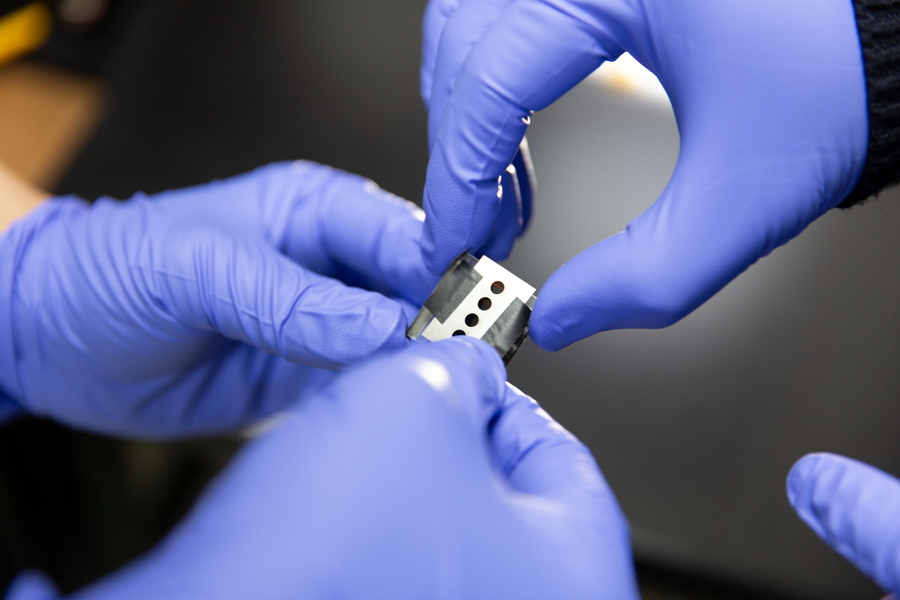
Professor Noh Jun-hong has been in the spotlight as an HCR for about half of the 15 years he has spent as a full-fledged researcher since his doctoral studies. This is mainly because, among the solar energy conversion technologies that he focuses on, he has made a significant contribution to solar cell research using perovskite materials. Perovskite is an innovative material that has recently been con-sidered a turning point in solar cell technology due to its excellent efficiency, simple manufacturing process, and flexibility.
“Solar cells are devices that absorb sunlight, harvest energy, and convert it into electricity. At this point, there are several factors to consider. For example, metals conduct electricity well but cannot absorb light. On the other hand, materials such as dyes can absorb light of certain wavelengths, but they cannot convert the absorbed energy into electricity, so they cannot be used as cells. For this rea-son, research on materials is a critical task for solar cells.”
The current widely used solar cells are based on silicon, which is limited in efficiency and versatility. However, in the early 1990s, the concept of dye-sensitized solar cells was proposed, laying the foun-dation for perovskite research, and in the early 2000s, when excellent efficiency was reported in the first case of applying perovskite to an absorption layer of a solar cell, new possibilities began to be raised. Then in 2012, the development of a solid electrolyte-based method overcame the instability issue in a liquid electrolyte environment, significantly improving stability and efficiency and acceler-ating the research on perovskites.
.jpeg "기술모식도")
A time driven by interests in new paths
Professor Noh was part of the perovskite research trend from the beginning because he joined the solar cell research team at the Korea Research Institute of Chemical Technology (KRICT) in 2011.
“During my master’s and doctoral courses, I studied electronic ceramics. However, I felt that the di-rection of research by humankind was shifting with the times. The energy issue, one of the major global challenges, was becoming more important, and I wanted to spend my limited time on something more meaningful. When I learned that solar cells were an energy-related field where I could utilize the ceramics I was researching, I decided to focus on solar energy research.”
His passion to make a meaningful contribution to the challenges of our time coincidentally led to the discovery of a new material with infinite potential; this research was conducted in the pursuit of solu-tions for humankind’s energy issues.
“I’ve always been interested in creating something new. I thought that if everyone else is already doing it, I don't necessarily need to do it too. I felt that what is best is to try something new that others aren’t doing and to find meaning from it.”
Professor Noh chose material engineering as his major as an undergraduate because he wanted to cre-ate new materials. He was fascinated by the idea that something useful could be created from some-thing that was previously unknown.
With hopes of contributing to addressing the climate crisis and energy issues
“The School of Civil, Environmental, and Architectural Engineering is studying the engineering re-quired for almost all the infrastructures that are necessary for the survival of humankind, and energy is an essential part of this field. Since the industrialization age, fossil fuels have become our main energy source. This led to the CO₂ problem and the climate crisis we are currently facing. From this perspec-tive, if we fail to wisely control the energy problem at this time, our whole civilization may disap-pear.”
The energy-related conversation naturally led to climate issues. After recognizing the seriousness of global warming, the international community agreed on the need to limit the rise in the earth’s average temperature to below 1.5 ℃ and set a goal of achieving carbon neutrality by 2050. To achieve this, it is necessary to increase the use of renewable energy without CO₂ emissions, and solar cells are con-sidered one of the renewable energy technologies with the highest feasibility at present.
The efficiency of silicon solar cells, which have been developed since the 1950s, is around the mid-20% level. On the other hand, perovskite solar cells, which have been studied for about a decade, have reached an efficiency of 27%, and are rapidly improving. In addition, tandem solar cells that use sili-con and perovskite together exhibit an efficiency of about 35%, and some countries and companies are working towards commercialization. Perovskite alone surpasses the efficiency of existing silicon solar cells, but there is still a long way to go for mass production and practical commercialization. Professor Noh is making new attempts with various materials and bonding methods to meet these needs.
A laboratory that discovers new things from various perspectives
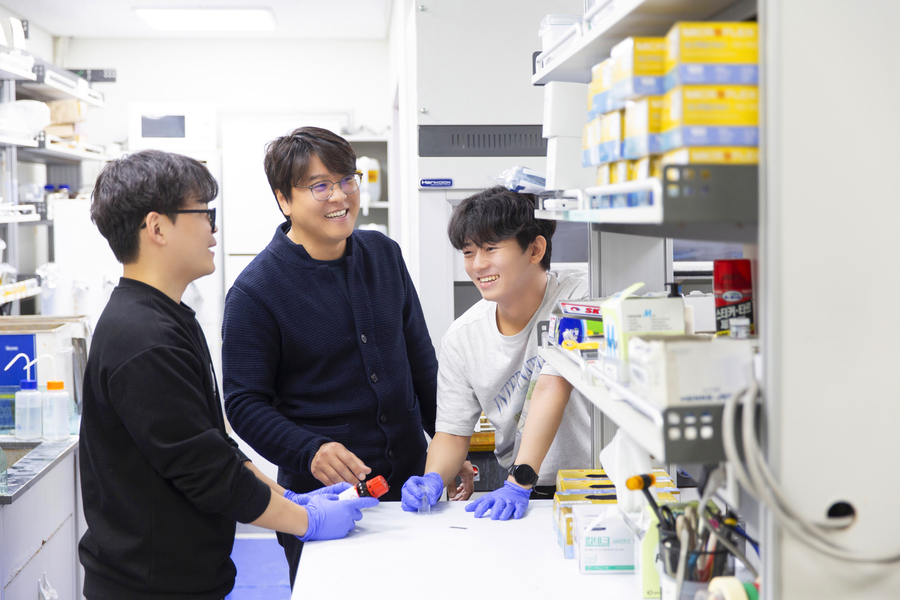
About 15 researchers are working together on this new endeavor in the lab. Just like Professor Noh’s major, which is a fusion of various fields, the researchers’ majors are also diverse. From different fields such as physics, chemistry, mechanical engineering, and civil, environmental, and architectural engineering, they are working together to explore new directions.
Solar cells are a topic of research in various fields, but Professor Noh’s lab is a bit more unique com-pared to the usual labs where those who have majored in material engineering, who deal with materi-als, work due to the use of semiconductors.
“The unique system of our lab is that people from various majors work together. I think that new things can come from those differences. Even when we look at the same thing, while people look at it from this side, we can choose to look at it from another side, and such an attitude is where something new comes from.”
Beyond the technical issues of solar cell efficiency
“Simply put, the direction of my research is to increase the efficiency of solar cells. However, the ul-timate reason why I want to dramatically increase the efficiency is because I want to develop a widely used technology. Amazingly improved results will attract more attention and will further motivate people to actually use solar cells. When solar cells are used more actively than they are now, they will be able to contribute a little more to reducing carbon emissions. Our research may not find a complete solution to the current climate crisis, but I hope we can contribute to it.”
As a researcher, Professor Noh’s goal is to contribute to solving the challenges of humankind. The professor shared his expectations that the researchers in different fields who work together in his lab as well as others working at KU will be able to solve the problems facing humankind one by one, as they dedicate themselves and their efforts at their respective positions with the same mindset.